







What's Happening?
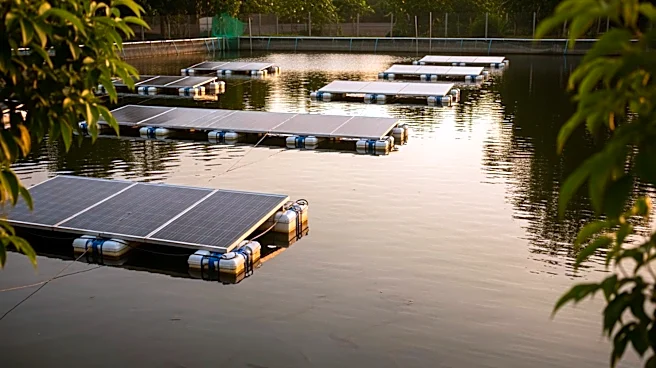
A recent study published in Communications Earth & Environment investigates the potential of fishery photovoltaic complementary integration (FPCI) as a dual-use solution for solar energy generation and aquaculture. The study explores the installation
of solar panels on aquaculture ponds and coastal tidal flats, allowing for renewable electricity generation alongside fish and shrimp farming. This approach aims to expand clean electricity generation, reduce carbon emissions, and support aquaculture growth without requiring additional land use. The study highlights the global potential of FPCI, identifying suitable deployment areas and estimating electricity generation potential. The research suggests that FPCI could support around 856 GW of global installed solar capacity, with significant contributions from Asia, particularly China, India, and Indonesia.
Why It's Important?
The integration of solar energy generation with aquaculture presents a promising strategy for advancing global decarbonization efforts. By utilizing existing water-based infrastructure, FPCI reduces the competition for land between solar projects and agriculture, urban development, and ecosystem conservation. The study estimates that FPCI could provide nearly 4% of the solar capacity required to achieve global net-zero targets by mid-century. This approach not only supports renewable energy expansion but also enhances food production and local economic growth, particularly in developing regions. The potential reduction in global carbon dioxide emissions by nearly 580 million tons annually underscores the environmental benefits of FPCI.
Beyond the Headlines
The study also addresses challenges that could impact large-scale FPCI deployment, such as ecological impacts, biodiversity concerns, and maintenance demands. The authors emphasize the need for region-specific environmental planning strategies to ensure sustainable deployment. Future research should focus on long-term impacts on water quality, aquatic ecosystems, and coastal environments. The economic analysis highlights strong commercial potential for FPCI, with countries like India, Egypt, and the United States emerging as attractive markets due to their high technical potential and favorable economic conditions.