







What's Happening?
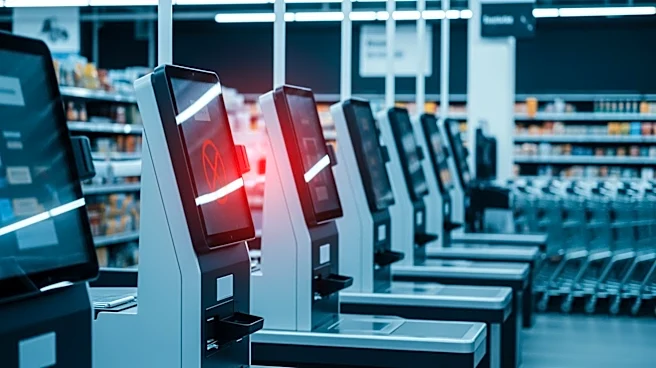
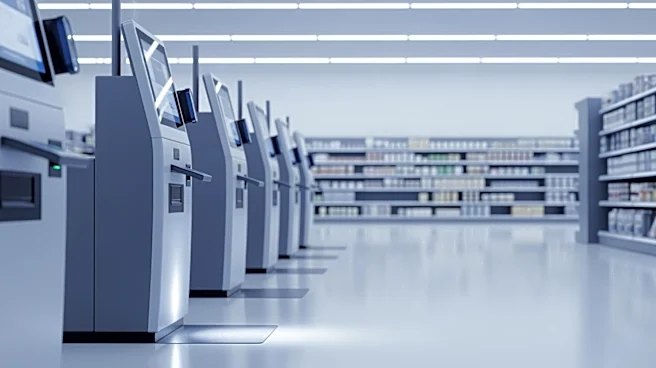
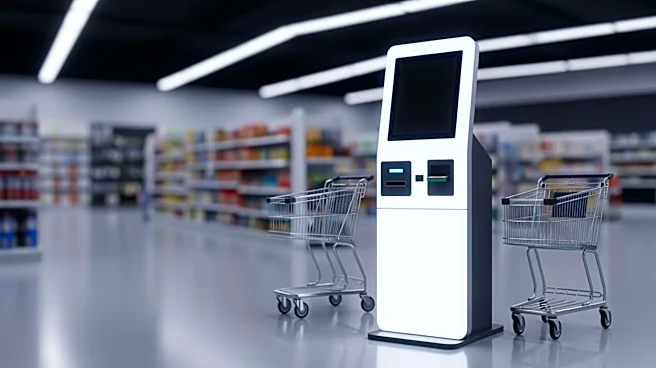
Costa Mesa, California, has introduced new regulations requiring major retailers like Walmart and Target to have an employee monitor self-checkout lanes. This policy, effective immediately, mandates that one attendant must be present for every three active
automated checkout stands. Additionally, shoppers are restricted from using self-checkout lanes if they have more than 15 items. These changes aim to reduce wait times and alleviate pressure on staff. Businesses have 15 days to comply with these rules or face fines, with penalties reaching up to $1,000 for non-compliance. The regulations have sparked debate, with some city officials arguing that the measures could deter business interests.
Why It's Important?
The new self-checkout regulations in Costa Mesa reflect a growing trend of cities attempting to manage the balance between automation and employment. By requiring human oversight of self-checkout lanes, the city aims to improve customer service and reduce potential theft. However, these measures could increase operational costs for retailers, potentially impacting their business models. The regulations also highlight a broader national conversation about the role of automation in retail and its implications for employment. Retailers may need to adjust their staffing strategies, which could influence their profitability and customer experience.
What's Next?
Retailers in Costa Mesa must adapt quickly to the new regulations to avoid fines. The policy could prompt other cities to consider similar measures, potentially leading to a patchwork of regulations across the country. Retailers may lobby for more uniform policies at the state or national level to streamline operations. Additionally, the impact of these regulations on customer satisfaction and store efficiency will likely be closely monitored, influencing future policy decisions. The response from major retailers and their ability to adapt will be crucial in determining the long-term viability of such regulations.