



What's Happening?
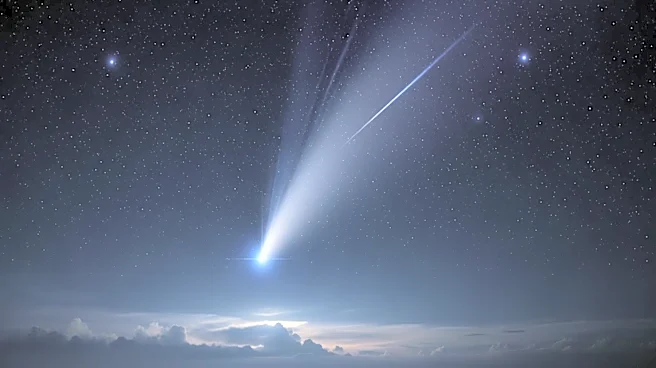
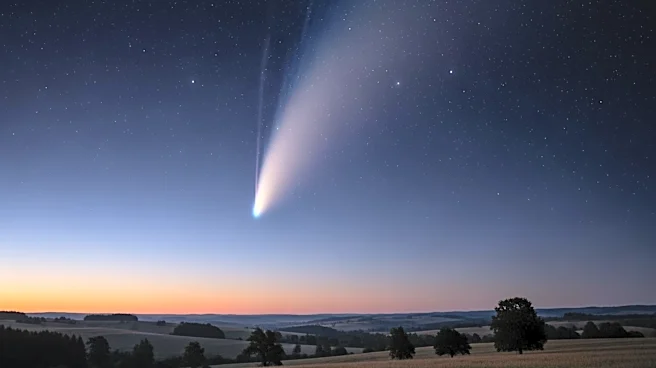
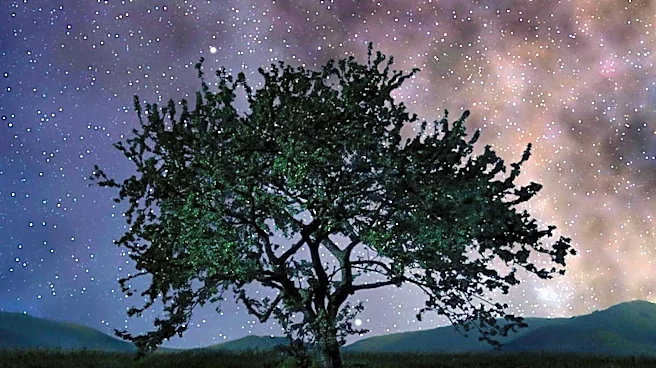
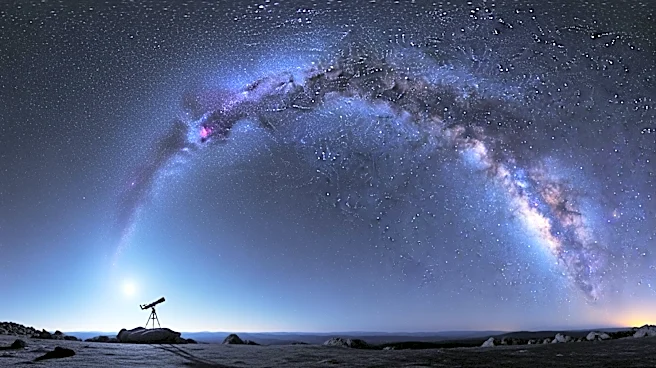
Astronomy enthusiasts have a unique opportunity to observe the zodiacal light in the western sky after sunset, thanks to the New Moon creating ideal viewing conditions. This faint glow, visible in the spring, is caused by sunlight scattering off dust
particles left by comets in the solar system. The zodiacal light appears as a cone-shaped glow extending from the horizon through Taurus and into Gemini and Cancer. Observers are encouraged to use long-exposure photography to capture this ethereal phenomenon, which is best viewed in areas with minimal light pollution.
Why It's Important?
The zodiacal light offers a rare chance for both amateur and professional astronomers to witness a celestial event that highlights the dynamic nature of our solar system. This phenomenon not only provides a visual spectacle but also serves as a reminder of the ongoing interactions between celestial bodies and the remnants of comets. Observing such events can inspire interest in astronomy and enhance public understanding of cosmic processes. Additionally, it underscores the importance of preserving dark skies for astronomical observations, which are increasingly threatened by urban light pollution.