


What's Happening?
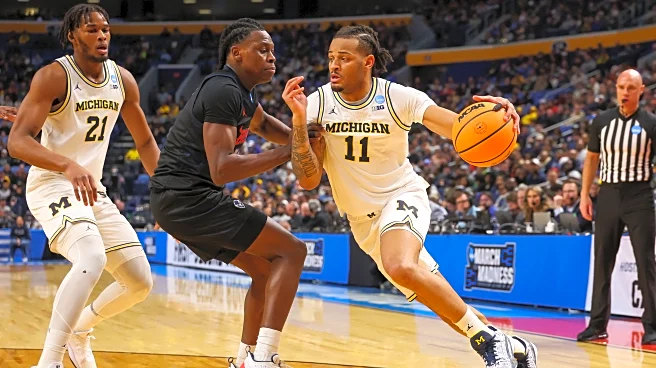
Howard University's participation in the 2026 NCAA Men's Basketball Tournament has significantly contributed to record-breaking viewership numbers for the event's first round. The game between Howard and Michigan, broadcasted by CBS Sports and TNT Sports,
attracted an average of 12.5 million viewers, marking it as the most-watched first-round window in NCAA Tournament history. Overall, the opening day of the tournament averaged 9.8 million viewers, a 6% increase from the previous year. Howard, a historically black college and university (HBCU), advanced to face Michigan after defeating UMBC in the NCAA First Four. The cultural and historical significance of Howard's participation drew interest from a broader audience, contributing to the surge in viewership.
Why It's Important?
The increased viewership highlights the growing interest in HBCU athletics and the cultural impact of their representation on a national stage. Howard's presence in the tournament not only showcases the competitive spirit of HBCU programs but also symbolizes pride and respect for historically underrepresented institutions. This surge in viewership can lead to increased visibility and support for HBCU sports programs, potentially influencing future broadcasting decisions and sponsorship opportunities. The record numbers also reflect the broader appeal of the NCAA Tournament, driven by compelling matchups and the drama of March Madness.
What's Next?
The success of Howard and the record viewership numbers may encourage more networks to feature HBCU games in their programming, potentially leading to increased funding and resources for these institutions. Additionally, the heightened interest in HBCU athletics could inspire more talented athletes to consider these programs, further enhancing their competitiveness. As the tournament progresses, stakeholders will likely monitor viewership trends to assess the impact of diverse representation on audience engagement.
Beyond the Headlines
Howard's participation in the NCAA Tournament underscores the importance of diversity and representation in sports. It highlights the potential for sports to serve as a platform for cultural expression and social change. The event also raises questions about the allocation of resources and support for HBCU programs compared to their predominantly white counterparts. As discussions about equity in sports continue, Howard's historic run may serve as a catalyst for broader conversations about inclusivity and representation in collegiate athletics.