
What's Happening?
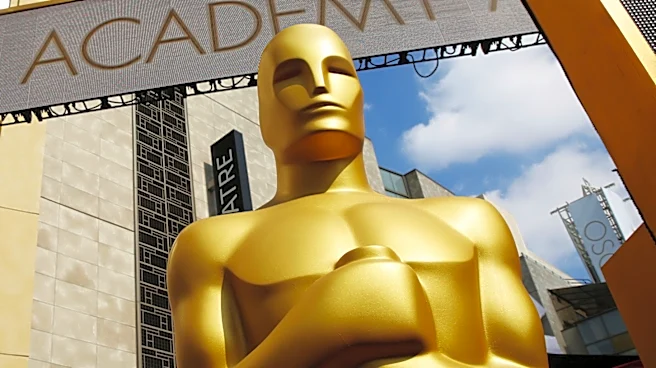
The Academy of Motion Picture Arts and Sciences has announced significant changes to the rules for the 99th Oscars, scheduled for 2027. Key updates include allowing actors to receive multiple nominations
in the same category if their performances rank among the top five vote-getters. This change aims to address 'category fraud' where actors are strategically placed in supporting roles to avoid vote splitting. Additionally, the Academy has introduced measures to ensure that only human-authored performances are eligible, responding to concerns about the use of AI in films. The international feature category has also been revised to allow multiple films from the same country to qualify for nominations, provided they win a top prize at one of six designated international film festivals.
Why It's Important?
These changes reflect the Academy's efforts to adapt to evolving industry standards and technological advancements. By allowing multiple nominations in the same category, the Academy aims to recognize the full scope of an actor's work in a given year, potentially increasing competition and diversity in nominations. The AI restrictions underscore the importance of human creativity in filmmaking, setting a precedent for how AI-generated content is treated in the industry. The expanded eligibility for international films could lead to greater global representation at the Oscars, offering a platform for diverse storytelling and cultural exchange. These updates could influence how films are produced, marketed, and campaigned for awards, impacting filmmakers, actors, and studios worldwide.
What's Next?
The new rules will be tested in the upcoming Oscars, with the potential to reshape nomination strategies and campaign approaches. Filmmakers and studios may need to adjust their strategies to align with the new eligibility criteria, particularly concerning AI usage and international submissions. The industry will be watching closely to see how these changes affect the diversity and inclusivity of the nominations. The Academy's commitment to evolving its rules suggests that further updates could be on the horizon as technology and industry practices continue to change.