
What's Happening?
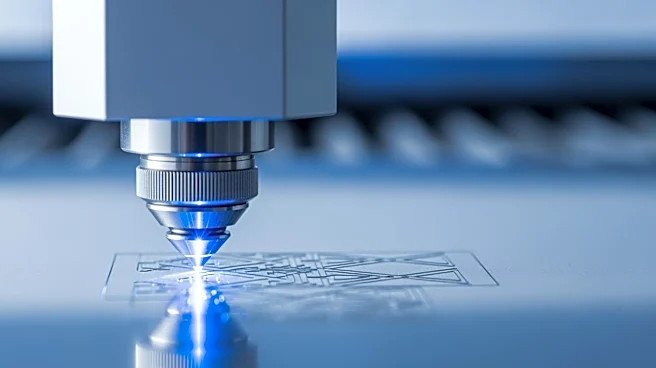
AI-powered laser engraving systems are becoming increasingly essential in digital manufacturing due to their ability to enhance precision and reduce human error. These systems utilize intelligent control
mechanisms to analyze design parameters and adjust engraving settings such as intensity, depth, and speed. This automation allows for more consistent and efficient production processes, particularly in high-precision work involving delicate materials like glass, coated metals, and plastics. The integration of AI in these systems represents a significant shift from manual to automated manufacturing, promising improved performance and reliability.
Why It's Important?
The adoption of AI-powered laser engraving systems in digital manufacturing is crucial as it addresses the industry's need for precision and efficiency. By minimizing human error and optimizing production parameters, these systems can significantly enhance output quality and consistency. This technological advancement is particularly beneficial for industries requiring high-level precision, such as electronics, automotive, and aerospace. The shift towards automation not only improves operational efficiency but also reduces costs associated with manual labor and errors, potentially leading to increased competitiveness and innovation in the U.S. manufacturing sector.
What's Next?
As AI-powered systems continue to evolve, their integration into various manufacturing processes is expected to expand. Companies may invest more in AI technologies to further automate and optimize their production lines. This could lead to a broader adoption of AI in other areas of manufacturing, such as quality control and supply chain management. Additionally, as these systems become more prevalent, there may be increased focus on developing industry standards and regulations to ensure safety and reliability. Stakeholders, including manufacturers and policymakers, will likely engage in discussions to address potential challenges and opportunities presented by this technological shift.
Beyond the Headlines
The integration of AI in manufacturing raises important ethical and legal considerations, particularly concerning data privacy and job displacement. As AI systems collect and analyze vast amounts of data, ensuring the protection of sensitive information becomes paramount. Moreover, the shift towards automation may lead to workforce changes, necessitating reskilling and upskilling initiatives to prepare workers for new roles in an AI-driven manufacturing environment. These developments could also influence cultural perceptions of technology and its role in society, prompting discussions on the balance between innovation and human labor.