
What's Happening?
Futura Gaïa, a company specializing in vertical farming, is pioneering a new approach to agriculture that combines advanced technology with precision agronomy. The company aims to produce a wide range
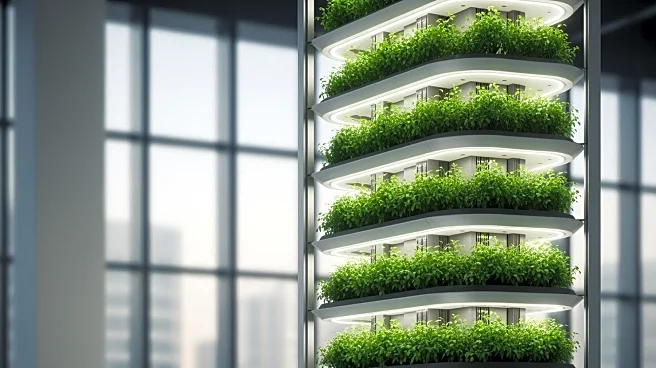
of plant species, from common crops to rare varieties, without using traditional farmland. This method respects environmental and biodiversity standards. Co-founder Pascal Thomas emphasizes that this form of agriculture is meant to complement existing methods rather than replace them. Futura Gaïa's indoor cultivation systems are designed for various industries, including food, cosmetics, pharmaceuticals, and nutraceuticals. These systems operate year-round, protected from adverse weather and free from pesticides, significantly reducing the need for imports. The plants are grown in rotating circular trays with natural substrates, ensuring even exposure to light and nutrients. Algorithms monitor environmental conditions to maintain stable and traceable production.
Why It's Important?
The development of vertical farming by Futura Gaïa represents a significant shift in agricultural practices, particularly in urban areas. This approach addresses several critical issues, such as reducing the environmental impact of traditional farming, conserving water, and minimizing the use of pesticides. By using up to twenty times less water than conventional farming, Futura Gaïa's methods contribute to sustainable resource management. Additionally, the ability to cultivate rare and endangered plant species without harming natural ecosystems could have substantial implications for biodiversity conservation. This innovation could lead to more resilient food systems, reduce dependency on imports, and provide fresh produce to urban populations, potentially transforming urban food supply chains.
What's Next?
Futura Gaïa plans to continue expanding its vertical farming operations, potentially increasing its influence in the agricultural sector. As urban populations grow, the demand for sustainable and locally produced food is likely to rise, providing opportunities for further development and adoption of vertical farming technologies. The company may also explore partnerships with other industries to enhance the application of its systems in cosmetics and pharmaceuticals. Stakeholders, including policymakers and environmental groups, may take an interest in supporting such sustainable agricultural practices, potentially leading to new regulations or incentives to promote vertical farming.
Beyond the Headlines
The implications of Futura Gaïa's vertical farming extend beyond immediate agricultural benefits. This innovation could lead to a cultural shift in how urban populations perceive and engage with agriculture. By bringing farming closer to city dwellers, there is potential for increased awareness and education about sustainable food production. Additionally, the technology-driven approach to farming may inspire further advancements in agricultural technology, encouraging more research and development in the field. The ethical considerations of reducing environmental impact while ensuring food security could also become a focal point for discussions on future agricultural policies.