




What's Happening?
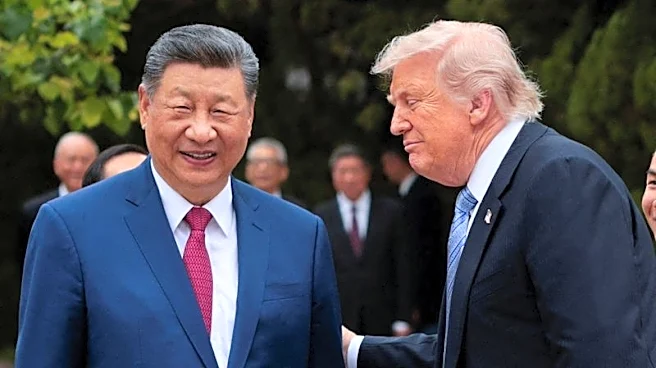
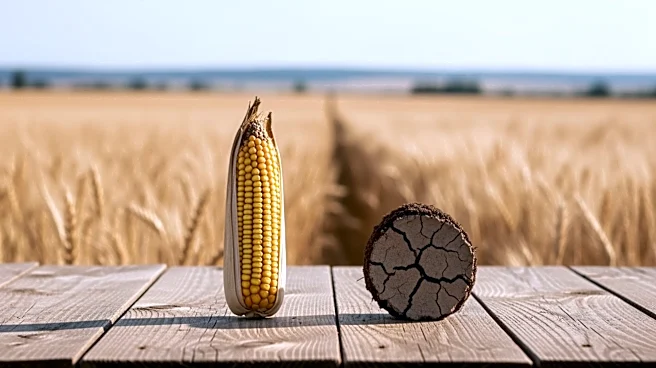
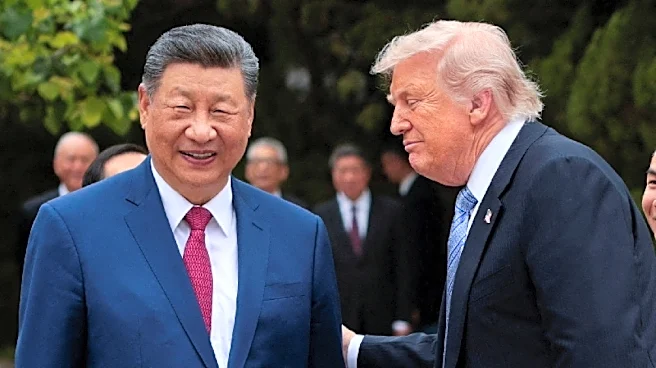
China has committed to purchasing at least $17 billion worth of U.S. agricultural products annually until 2028. This agreement, part of recent trade negotiations, includes commodities such as soybeans, corn, sorghum, pork, cotton, animal feed, and dairy
products. The deal provides a multi-year purchasing floor, offering some stability to U.S. farmers. However, it represents a reduction from the Phase One trade deal targets set in 2020, which aimed for $30 billion annually. Despite substantial imports during that period, China did not meet those targets, partly due to the COVID-19 pandemic and strategic shifts in its supply chain, favoring other countries like Brazil and Argentina. The new agreement acknowledges these changes while ensuring a baseline demand for U.S. agricultural exports.
Why It's Important?
This agreement is significant for U.S. agriculture, providing a guaranteed market for American farmers who have faced economic challenges due to trade tensions and market fluctuations. The $17 billion annual commitment offers a degree of certainty, potentially stabilizing prices and supporting farm incomes. However, the reduced target compared to previous agreements highlights China's evolving trade strategy and its impact on U.S. agricultural exports. The deal's implications extend to broader economic relations between the U.S. and China, influencing trade policies and economic forecasts. It also affects global agricultural markets, as China's purchasing decisions can shift supply and demand dynamics worldwide.
What's Next?
The agreement sets the stage for ongoing trade discussions between the U.S. and China, with potential implications for other sectors and trade issues. U.S. agricultural stakeholders will closely monitor the implementation of this agreement, assessing its impact on their operations and market conditions. The broader economic effects of this trade commitment will be observed by financial markets and policymakers, influencing economic strategies and decisions. As both countries navigate their trade relationship, further negotiations may address additional trade barriers and opportunities for collaboration.