





What's Happening?
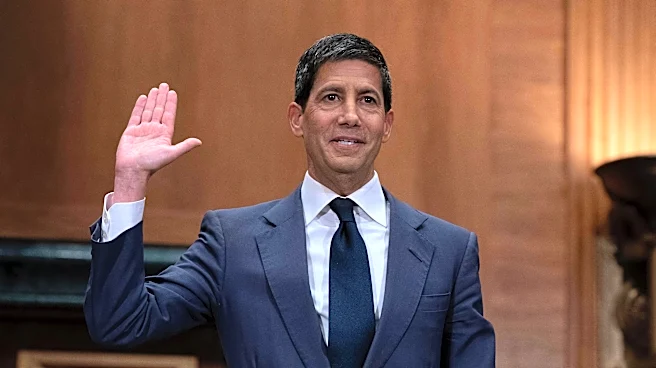
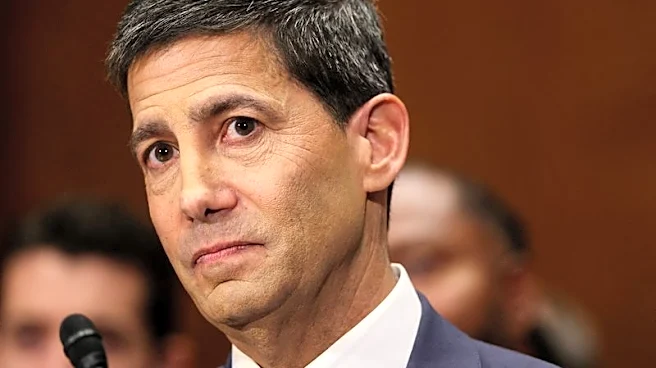
Kevin Warsh has been confirmed by the U.S. Senate as the new chair of the Federal Reserve, succeeding Jerome Powell. President Trump selected Warsh, a former Fed governor, to lead the central bank, believing he can deliver the economic growth promised
to voters. Warsh's appointment comes at a time when the Fed is grappling with the economic fallout from a conflict involving the U.S., Israel, and Iran, which has driven up energy prices and complicated efforts to control inflation. Despite his past reputation as an inflation hawk, Warsh has aligned with Trump's calls for lower interest rates, arguing that technological advancements can boost growth without sparking inflation. His confirmation was delayed by a Justice Department investigation into the Fed, which was seen as an attempt to remove Powell.
Why It's Important?
Warsh's confirmation as Fed chair is significant as it signals a potential shift in U.S. monetary policy. His alignment with President Trump's preference for lower interest rates could lead to policy changes aimed at stimulating economic growth. However, this approach carries risks, particularly in an environment of elevated inflation and economic uncertainty. Warsh's leadership will be crucial in navigating these challenges and maintaining the Fed's independence, which has been a point of contention under Trump's administration. The decision also highlights the ongoing political influence on the central bank, with potential implications for its credibility and effectiveness in managing the economy.
What's Next?
As Warsh assumes his role, he will face the immediate challenge of balancing the need for economic growth with the risk of inflation. His ability to navigate these issues will be closely watched by markets and policymakers. Additionally, Warsh's relationship with Powell, who remains on the Fed's board, could impact decision-making and the central bank's internal dynamics. The Fed's policy direction under Warsh will have significant implications for the U.S. economy, influencing interest rates, inflation, and overall economic stability.