



What's Happening?
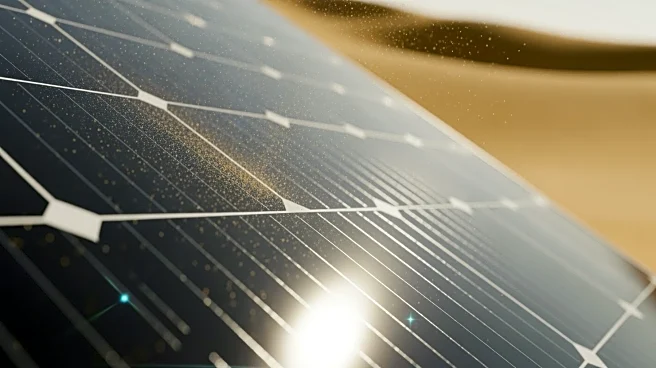
A team of Egyptian scientists has developed an innovative self-cleaning solar panel system inspired by the natural movement of tree leaves. This biomimetic technology is designed to address the significant issue of dust accumulation on solar panels in arid regions, which can reduce their efficiency by up to 33% in just six weeks. Led by Mohamed Salama Abdel-Hadi from the German University in Cairo, the system uses a small motor with a counterweight to generate vibrations that shake off dust without the need for water or human intervention. Initial tests in Cairo have shown promising results, with the self-cleaning panels losing only 12.9% of their efficiency over six weeks, compared to 33% for conventional panels. This technology not only improves
performance but also drastically reduces maintenance costs, allowing for a quick return on investment.
Why It's Important?
The development of self-cleaning solar panels is a significant advancement for the solar energy sector, particularly in desert regions where dust accumulation is a major challenge. By reducing the need for frequent manual cleaning, this technology can lower operational costs and increase the viability of solar power installations in remote and arid areas. The economic implications are substantial, as the cost of maintaining solar panels can be a barrier to their widespread adoption. This innovation could lead to more sustainable and cost-effective solar energy solutions, contributing to the global push for renewable energy sources. Additionally, the use of biomimicry in technology design highlights the potential for nature-inspired solutions to address complex engineering challenges.
What's Next?
Following the successful initial tests, the team plans to expand the deployment of these self-cleaning solar panels to other regions, including a new installation in Giza. The flexible design of the panels allows for adaptation to various environments, making them suitable for rural or isolated areas where traditional maintenance is difficult. The researchers are also exploring the potential for a passive version of the system that operates solely on wind power, which could further reduce costs and increase efficiency. As the technology gains traction, it may attract interest from international markets looking to enhance their solar energy capabilities in challenging environments.
Beyond the Headlines
The use of biomimicry in the development of self-cleaning solar panels represents a broader trend in engineering and design, where natural processes inspire innovative solutions to human challenges. This approach not only offers practical benefits but also encourages a more sustainable interaction with the environment. The success of this project could inspire further research into other applications of biomimicry, potentially leading to breakthroughs in various fields such as architecture, transportation, and materials science. As the world continues to grapple with environmental challenges, such innovations could play a crucial role in creating a more sustainable future.