



What's Happening?
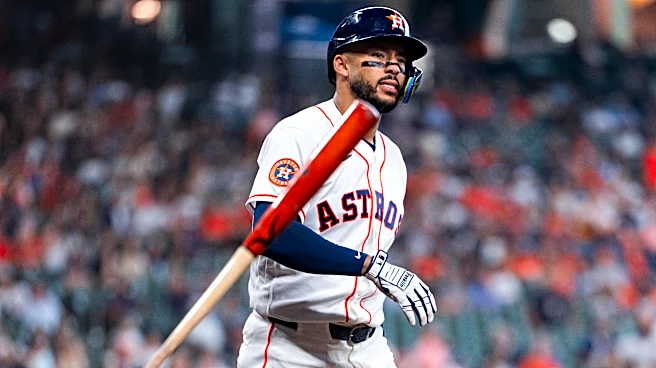
Houston Astros first baseman Christian Walker was struck in the head by a fastball during a game against the Boston Red Sox. The incident occurred in the ninth inning when Boston's left-hander Tyler Samaniego delivered a 93.3 mph pitch that hit Walker's
helmet, causing a piece of it to fly off. Despite the alarming nature of the hit, Walker reported feeling okay after the game, attributing his condition to the helmet absorbing most of the impact. He mentioned that the ball hit the helmet first before making contact with his head, which helped mitigate the blow. Walker was attended to by a trainer and left the field holding a towel to his forehead. However, he did not sustain any cuts, and there was no bleeding. Walker expressed confidence in his ability to play in the upcoming game on Sunday, having passed concussion protocols and feeling no significant aftereffects.
Why It's Important?
The incident highlights the inherent risks and dangers faced by baseball players, particularly batters, who are vulnerable to high-speed pitches. Walker's ability to potentially return to play so soon after such a scare underscores the effectiveness of modern protective gear, such as helmets with C-flaps designed to protect the jaw. This event also serves as a reminder of the importance of safety measures in sports to prevent serious injuries. For the Houston Astros, Walker's quick recovery is crucial as he is a key player, contributing significantly to the team's performance with his hitting prowess. His presence in the lineup is vital for maintaining the team's competitive edge in the league.
What's Next?
Walker plans to participate in the next game, provided he does not experience any unexpected symptoms such as neck stiffness. The Astros will likely monitor his condition closely to ensure he is fit to play. The team and medical staff will continue to assess his health, particularly looking out for any delayed concussion symptoms. This incident may prompt discussions within the league about further enhancing player safety protocols and equipment standards to prevent similar occurrences in the future.