





What's Happening?
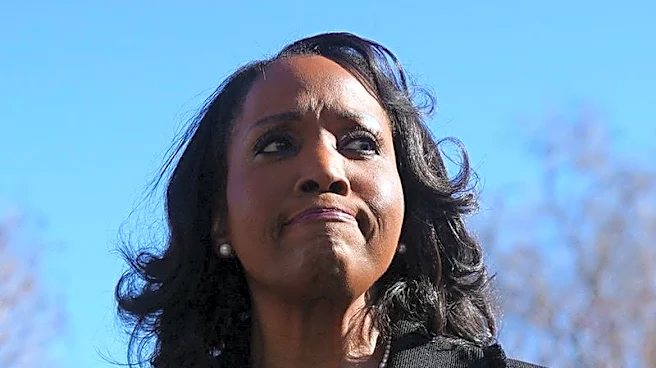
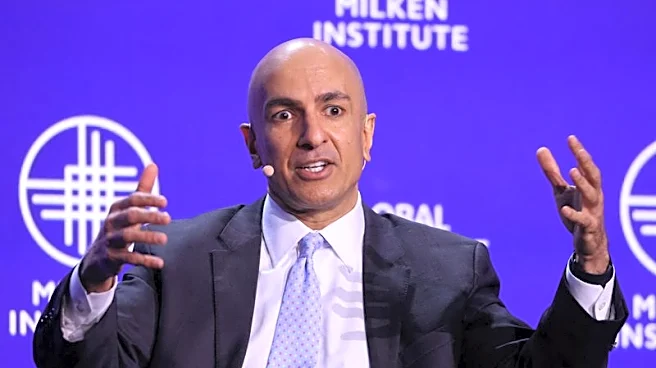
Federal Reserve Vice Chair Philip Jefferson emphasized the importance of focusing on inflation control, given the resilience of the US labor market amidst the current energy shock. Speaking at a conference in Tokyo, Jefferson highlighted the challenges
posed by rising energy and gasoline prices, which are affecting everyday Americans. Despite these challenges, the US economy continues to grow, partly driven by expanding AI investments. Jefferson noted the difficulty in predicting the Fed's rate policy due to uncertainties surrounding the energy shock's duration and impact. He reiterated the Fed's commitment to its dual mandate of price stability and labor market considerations.
Why It's Important?
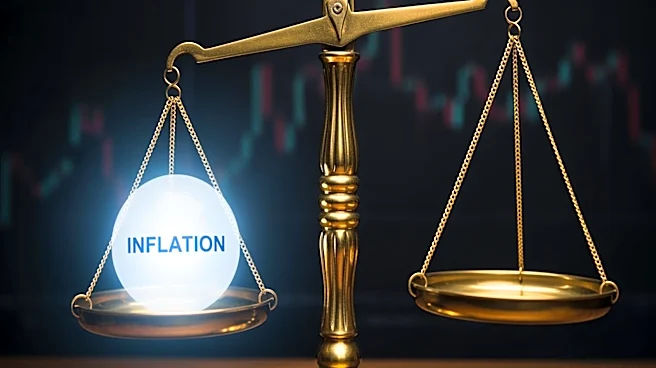
Jefferson's remarks underscore the Federal Reserve's balancing act between managing inflation and supporting economic growth. The focus on inflation is crucial as rising prices can erode consumer purchasing power and economic stability. The resilience of the labor market provides some leeway for the Fed to prioritize inflation control without immediate concerns about unemployment. However, the ongoing energy shock presents a significant challenge, potentially impacting economic growth and complicating monetary policy decisions. The Fed's approach will be closely watched by markets and policymakers, as it influences economic conditions and financial stability.
What's Next?
The Federal Reserve is set to hold its next policy meeting on June 16-17, where discussions will focus on the appropriate monetary policy stance to achieve its dual mandate. The Fed will continue to monitor the impact of the energy shock and other economic indicators to guide its decisions. Stakeholders, including businesses and consumers, will be attentive to the Fed's communications and policy adjustments, as these will have implications for interest rates, inflation, and economic growth.