
What's Happening?
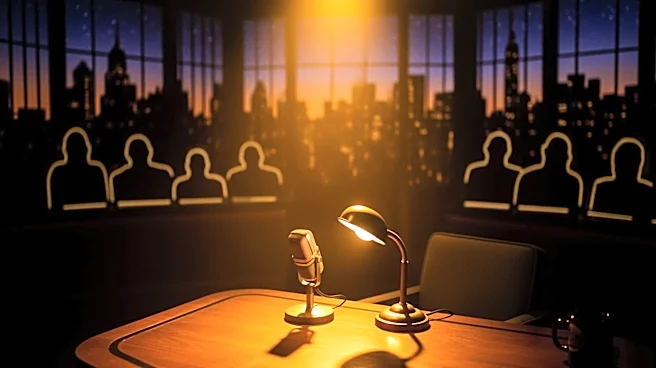
Stephen Colbert's tenure as host of 'The Late Show' on CBS concluded on May 21, 2026, marking the end of an era for the network's late-night programming. The cancellation of the show was officially attributed
to financial reasons by CBS. However, the decision has sparked discussions about potential underlying motives, particularly in the context of recent legal and corporate developments involving CBS and Paramount. The cancellation coincided with a $16 million settlement paid by CBS and Paramount to resolve a lawsuit filed by President Trump, which Colbert had previously criticized on his show. Additionally, the timing aligns with Paramount's plans to acquire Skydance, a move requiring government approval. Colbert, known for his critical stance on political figures, especially President Trump, has been a significant voice in political satire, a genre that has seen increased prominence in late-night television since Trump's election in 2016.
Why It's Important?
The cancellation of 'The Late Show' with Stephen Colbert is significant as it reflects broader trends in media and political discourse. Colbert's show was a leading platform for political satire, a genre that plays a crucial role in critiquing and holding power to account. The show's end raises concerns about the future of such critical voices in mainstream media, especially amid allegations of censorship and regulatory pressure from the government. The situation underscores the challenges faced by traditional broadcast models in a rapidly changing media landscape, where financial viability often dictates programming decisions. Moreover, the incident highlights the potential influence of political and corporate interests on media operations, raising questions about the independence of the press and the ability of media outlets to operate without external pressures.
What's Next?
Following the cancellation, there is speculation about the future of political satire on television. While Colbert's departure marks the end of an era, it also opens the door for new voices and formats to emerge in the late-night space. The broader implications for media freedom and the role of satire in political discourse remain to be seen, as stakeholders in the industry and government continue to navigate the complex interplay of media, politics, and business interests. The situation may prompt discussions about regulatory practices and the need for safeguards to protect media independence. Additionally, the response from audiences and other media figures, such as Jimmy Kimmel, who has also faced scrutiny, will be crucial in shaping the future landscape of political satire and late-night television.
Beyond the Headlines
The cancellation of 'The Late Show' with Stephen Colbert may have deeper implications for the cultural and political landscape in the U.S. The show's end could signal a shift in how political satire is perceived and valued in mainstream media. As traditional broadcast models face economic challenges, there may be a move towards digital platforms and alternative media for political commentary and satire. This transition could democratize the space, allowing for a more diverse range of voices and perspectives. However, it also raises concerns about the accessibility and reach of such content, as digital platforms often operate under different economic and regulatory constraints. The situation highlights the ongoing tension between media freedom and external pressures, emphasizing the need for vigilance in protecting the role of satire as a tool for democratic engagement and critique.