






What's Happening?
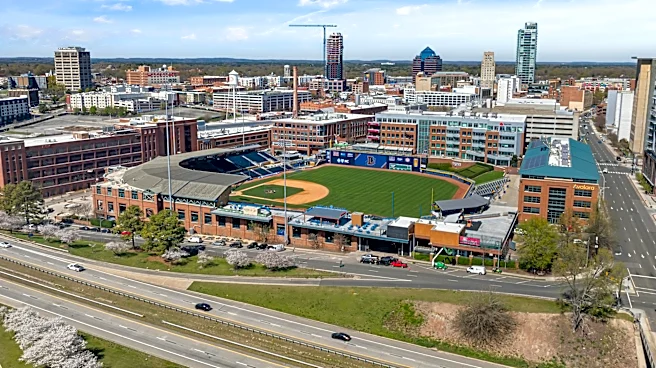
Realtor.com has released its April Luxury Housing Report, highlighting 12 emerging luxury markets in the U.S. where high-end real estate is rapidly expanding. These markets, including Fayetteville, Arkansas, and Durham, North Carolina, are experiencing
significant growth in million-dollar listings, often surpassing the national rate of inventory growth. The national luxury threshold has reached $1,274,423, marking a 2.0% increase from March, although it remains 1.9% below the previous year's levels. The report identifies two main drivers of this luxury market expansion: new construction in fast-growing areas and the appreciation of existing estates in regions like the Hudson Valley. This shift in luxury real estate is attributed to factors such as corporate relocation in the Southeast and a growing desire for privacy and land in areas like the Hudson Valley.
Why It's Important?
The emergence of new luxury markets signifies a shift in the U.S. real estate landscape, moving away from traditional coastal powerhouses to mid-sized metros. This trend offers high-end buyers more diverse options, balancing lifestyle preferences with more accessible entry points compared to established luxury markets. The growth in these areas could lead to increased economic activity, attracting businesses and professionals seeking new opportunities. Additionally, the expansion of luxury real estate in these regions may influence local economies, potentially boosting job creation in construction and related industries. As these markets develop, they could redefine the luxury real estate sector, offering a broader range of options for affluent buyers.
What's Next?
As these emerging luxury markets continue to grow, they may attract more attention from developers and investors looking to capitalize on the expanding high-end real estate sector. This could lead to further development of luxury properties and infrastructure improvements in these areas. Additionally, the shift in luxury real estate dynamics may prompt established markets to adapt, potentially leading to increased competition and innovation in the sector. Stakeholders, including local governments and businesses, may need to address challenges related to infrastructure, zoning, and community impact as these markets evolve.