
What's Happening?
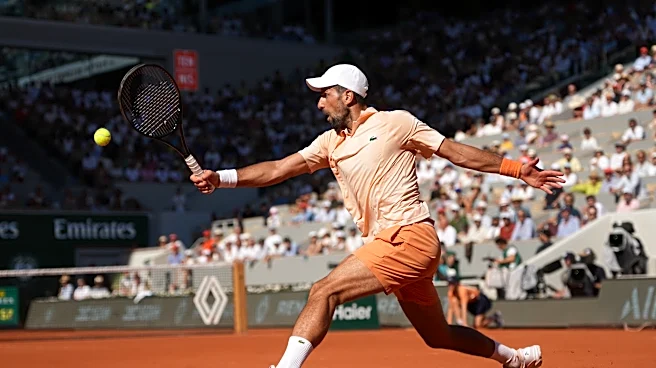
Ukrainian tennis player Oleksandra Oliynykova has publicly criticized the ongoing war in Ukraine and her Russian opponent, Diana Shnaider, following her loss in the third round of the French Open. Oliynykova,
who lost to Shnaider 7-5, 6-1, used her post-match news conference to read a statement condemning the war and the actions of Russian players. She emphasized that her stance is about humanity, not politics, and criticized Shnaider for allegedly supporting Russian propaganda and participating in a Gazprom-sponsored event. Oliynykova accused Gazprom of financing war crimes, stating that her home is under attack by Gazprom money. Shnaider, ranked No. 25, claimed she was unaware of Oliynykova's comments and defended her participation in the Gazprom event as a rare opportunity to play in front of her family.
Why It's Important?
Oliynykova's comments highlight the intersection of sports and geopolitics, particularly in the context of the ongoing conflict in Ukraine. Her statements bring attention to the role of athletes as public figures who can influence public opinion and raise awareness about global issues. The situation underscores the challenges faced by Ukrainian athletes who continue to compete internationally while their country is at war. It also raises questions about the responsibilities of athletes and sports organizations in addressing political and humanitarian issues. The involvement of Gazprom, a major Russian company, in sports sponsorship further complicates the narrative, as it ties economic interests to geopolitical conflicts.
What's Next?
Oliynykova has vowed to continue speaking out against the war, indicating that her activism will persist as long as the conflict affects her life and future in Ukraine. The broader tennis community may face increased pressure to address the political tensions between Ukrainian and Russian players. Sports organizations, including the French Open, might need to consider their stance on political expressions by athletes. The ongoing conflict in Ukraine is likely to remain a contentious issue within the sports world, potentially influencing future tournaments and sponsorships.
Beyond the Headlines
The situation raises ethical questions about the role of sports in political discourse and the extent to which athletes should engage in activism. It also highlights the cultural and emotional impact of the war on individuals like Oliynykova, whose personal life is deeply intertwined with the conflict. The narrative of sports as a unifying force is challenged by the reality of geopolitical tensions, prompting a reevaluation of how sports can contribute to peace and understanding in a divided world.