


What's Happening?
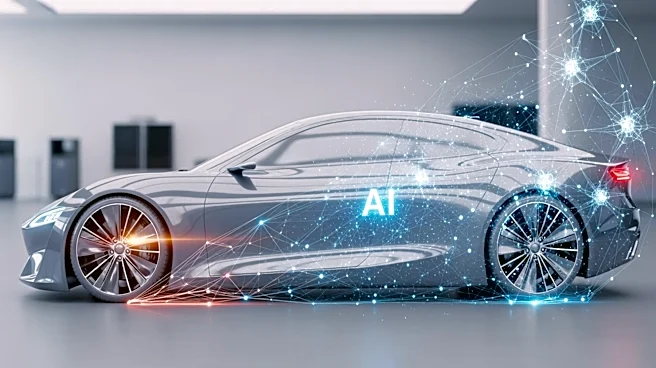
General Motors (GM) is leveraging artificial intelligence (AI) to streamline and enhance the car design process. The company has integrated AI tools to augment human creativity, allowing designers to generate and iterate on ideas more rapidly. According
to GM, processes that previously required weeks or months can now be completed in minutes, freeing up designers to focus on creative aspects. Despite the integration of AI, GM emphasizes that human creativity remains central to the design process, with every new vehicle still originating from the sketches of a human designer. The AI tools assist by visualizing these sketches and providing rapid feedback, thus accelerating product development. GM designer Daniel Shapiro highlights that AI helps visualize the outcomes of creative visions sooner, as demonstrated in a recent project where AI was used to transform hand-drawn sketches into 3D animations.
Why It's Important?
The adoption of AI in car design by GM signifies a broader trend in the automotive industry towards integrating advanced technologies to improve efficiency and innovation. This move could potentially reshape the industry by reducing the time and cost associated with vehicle design, allowing companies to bring new models to market more quickly. For designers, AI offers a tool that enhances their creative capabilities rather than replacing them, suggesting a future where human and machine collaboration becomes the norm. This development may also influence job roles within the industry, as designers adapt to new technologies that change how they work. The broader implication is a shift in how industries perceive AI—not as a threat to jobs, but as a partner in innovation.
What's Next?
As GM continues to explore the capabilities of AI in design, other automotive companies may follow suit, leading to widespread adoption of AI technologies across the industry. This could result in a competitive advantage for early adopters who can innovate faster and more efficiently. Additionally, the integration of AI in design processes may prompt educational institutions to update curricula to include AI training for future designers. Stakeholders, including labor unions and industry leaders, may need to address the evolving role of AI in the workforce, ensuring that employees are equipped with the necessary skills to thrive in an AI-augmented environment.