





What's Happening?
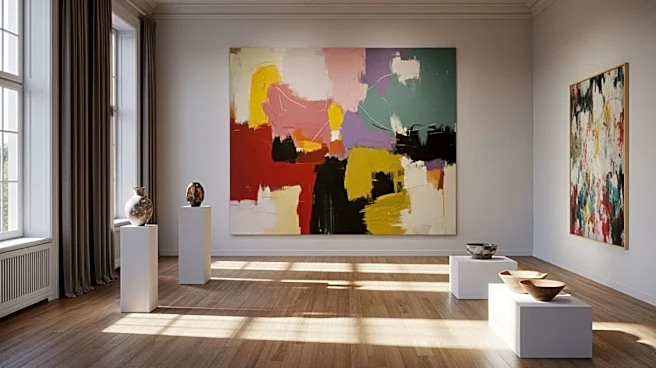
Michael Armitage, a prominent artist known for his unique blend of East African and Western European art influences, is showcasing a monographic exhibition at the Palazzo Grassi in Venice. The exhibition, titled 'The Promise of Change,' features 46 large
paintings and nearly 100 sketches, covering the past decade of Armitage's work. Armitage, who grew up in Kenya, draws inspiration from the political instability, violence, and migration issues prevalent in the region. His work is characterized by a mix of documentary and dreamlike scenarios, influenced by both cinema and historical art figures like Goya. The exhibition also highlights Armitage's use of lubugo, a canvas made from tree bark, which adds a unique texture and cultural significance to his paintings.
Why It's Important?
This exhibition is significant as it highlights the cross-cultural dialogue between East African and Western European art traditions. Armitage's work not only brings attention to the socio-political issues in Kenya but also challenges the traditional boundaries of art by incorporating diverse influences. The use of lubugo canvas, for instance, emphasizes the importance of cultural identity and heritage in contemporary art. By showcasing his work at a prestigious venue like Palazzo Grassi, Armitage is positioned as a leading figure in the global art scene, potentially influencing future generations of artists to explore and integrate diverse cultural narratives in their work.
What's Next?
The exhibition is set to run until January 2027, providing ample opportunity for art enthusiasts and critics to engage with Armitage's work. As the exhibition progresses, it may spark discussions on the role of cultural identity in art and the importance of addressing socio-political issues through creative expression. Additionally, Armitage's growing influence could lead to more collaborations and exhibitions that further explore the intersection of different art traditions and contemporary issues.
Beyond the Headlines
Armitage's work also raises questions about the role of the artist as a commentator on social and political issues. His paintings, which often depict scenes of violence and migration, challenge viewers to confront uncomfortable realities and consider their own positions within these narratives. The exhibition's setting in Venice, a city with its own complex history of cultural exchange, adds another layer of depth to the conversation about globalization and the movement of people and ideas across borders.