

What's Happening?
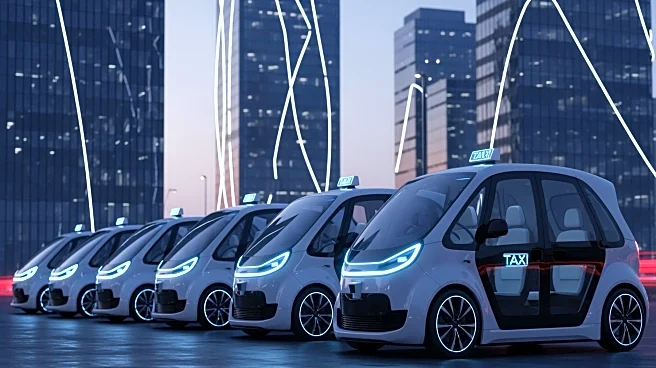
Uber has recently announced three new partnerships with Zoox, Wayve-Nissan, and Rivian to expand its presence in the robotaxi market. This move is part of a broader strategy to prevent any single company, such as Waymo or Tesla, from dominating the autonomous
vehicle sector. Over the past few years, Uber has formed alliances with multiple companies, including WeRide, AVride, May Mobility, and others, to diversify its supplier base. Currently, only a few of these partners have launched fully driverless, paid operations, with Waymo being the only one operating in the U.S. Uber's strategy is to act as an aggregator, ensuring multiple vendors can participate in the robotaxi economy, thereby reducing the risk of any one company gaining a monopoly.
Why It's Important?
The expansion of Uber's partnerships in the robotaxi sector is significant as it aims to secure a competitive edge in the rapidly evolving autonomous vehicle market. By diversifying its partnerships, Uber is not only hedging against the risk of a single company dominating the market but also positioning itself as a central player in the robotaxi ecosystem. This strategy could potentially increase Uber's negotiating power and allow it to secure more favorable terms with its partners. Additionally, by fostering a competitive environment, Uber can help drive down costs, which could lead to increased demand for autonomous rides. This move is crucial for Uber's long-term sustainability and growth in the face of potential competition from companies like Waymo and Tesla.
What's Next?
As Uber continues to expand its network of robotaxi partnerships, the company will likely focus on scaling these operations to achieve a fully driverless, commercial fleet. The success of this strategy will depend on the ability of its partners to deploy safe and cost-effective autonomous vehicles. Uber's future actions may include further investments in its partners to attract additional capital and support the development of the robotaxi ecosystem. The company will also need to navigate regulatory challenges and public acceptance of autonomous vehicles. As the market evolves, Uber's ability to maintain its position as a key player will hinge on its capacity to adapt to technological advancements and competitive pressures.