


What's Happening?
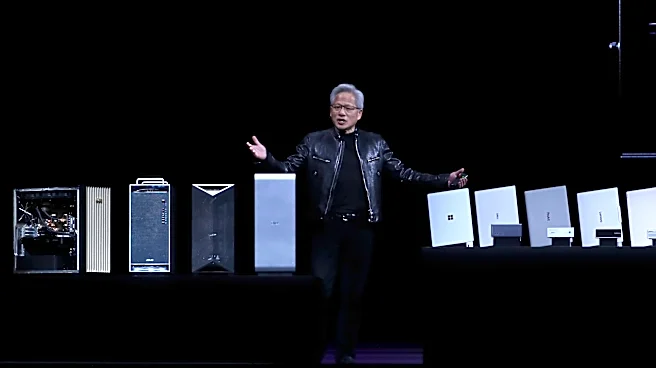
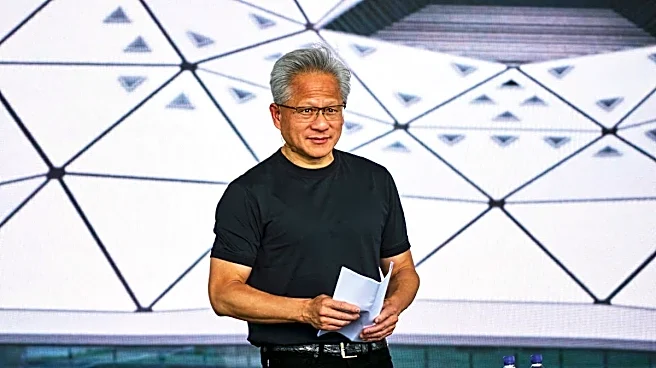
Nvidia CEO Jensen Huang delivered a keynote at Computex in Taiwan, emphasizing the transformative role of AI in computing. Huang introduced the RTX Spark, a new chip designed to enable AI agents to run natively on personal computers, marking a shift from
data center-focused AI to personal computing. This move positions Nvidia in direct competition with Intel and AMD. Huang also highlighted Nvidia's evolution into an infrastructure company, unveiling the Nvidia DSX framework for AI factory operations. He expressed optimism about AI's impact on software engineering, countering fears of job loss by suggesting AI will increase demand for software engineers due to productivity gains.
Why It's Important?
Huang's keynote underscores Nvidia's strategic pivot towards integrating AI into personal computing, which could redefine the PC market and challenge existing players like Intel and AMD. By enabling AI to run locally on devices, Nvidia addresses privacy and speed concerns associated with cloud-based AI. This development could accelerate AI adoption in consumer technology, driving innovation and competition. Additionally, Huang's positive outlook on AI's impact on employment suggests a potential shift in the tech industry's workforce dynamics, with increased demand for skilled engineers to harness AI's capabilities.
What's Next?
Nvidia's introduction of the RTX Spark chip could lead to a new era of AI-powered personal computing, prompting other tech companies to innovate and adapt. As Nvidia continues to build its infrastructure capabilities, we may see further advancements in AI factory operations and the development of more efficient AI models. The company's collaboration with Microsoft for AI-enabled Windows PCs could set a precedent for future partnerships in the tech industry. The broader implications of these developments will likely influence market trends, consumer expectations, and the competitive landscape in the tech sector.