



What's Happening?
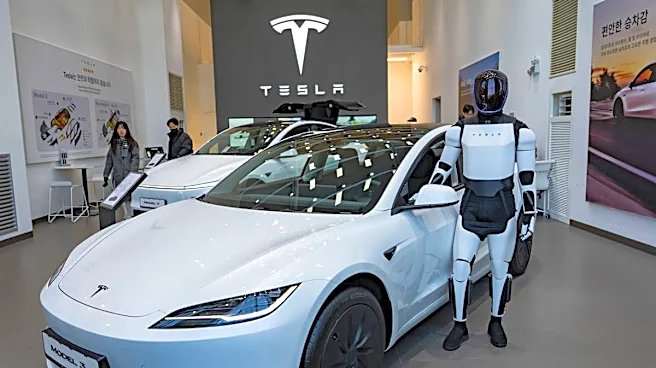
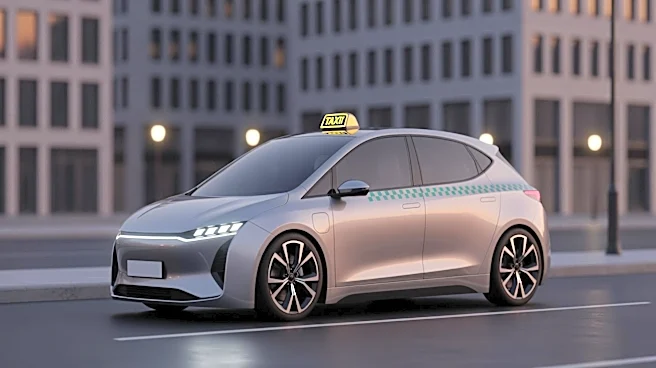
Tesla currently operates 42 unsupervised robotaxis in Texas, a figure significantly lower than its competitors, according to a newly required government database. This number falls short of CEO Elon Musk's previous projections, where he anticipated the
service would be available to half of the U.S. population by the end of 2025. In contrast, Alphabet's Waymo operates 577 robotaxis in Texas and over 3,000 nationwide. Other competitors like Avride and Nuro also surpass Tesla with 317 and 47 robotaxis, respectively. The challenge for Tesla remains in scaling its camera-only autonomous vehicles to a commercial level, a task that has proven difficult despite Musk's ambitious goals.
Why It's Important?
The disparity in robotaxi numbers highlights Tesla's struggle to compete in the autonomous vehicle market, which is crucial for its future growth and innovation strategy. The ability to scale its robotaxi fleet is vital for Tesla to maintain its competitive edge and meet consumer demand. The current situation may impact investor confidence and Tesla's market position, especially as competitors like Waymo continue to expand their operations. The success of autonomous vehicles is also pivotal for the broader adoption of self-driving technology, which could revolutionize transportation and reduce reliance on human drivers.
What's Next?
Tesla's next steps will likely involve addressing the technical and regulatory challenges that have hindered the expansion of its robotaxi fleet. The company may need to invest in further research and development to enhance the reliability and safety of its autonomous vehicles. Additionally, Tesla might explore partnerships or collaborations to accelerate its progress in this competitive field. Stakeholders, including investors and consumers, will be closely monitoring Tesla's efforts to scale its operations and meet its ambitious targets.