
What's Happening?
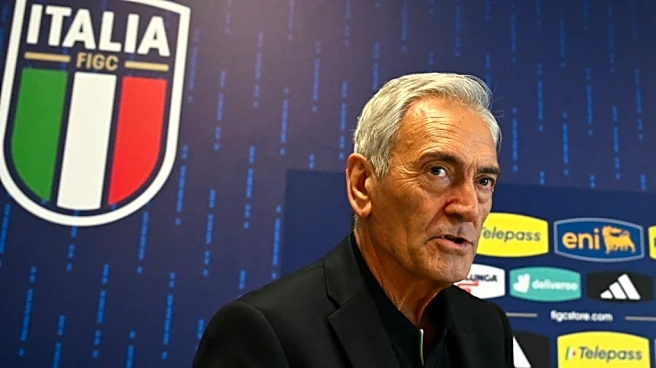
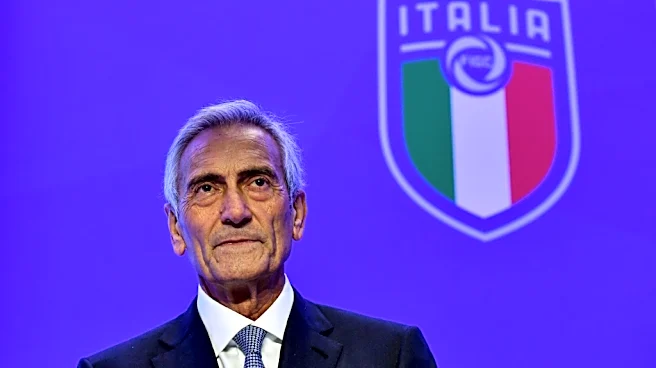
Italy's soccer federation president, Gabriele Gravina, has resigned amid political pressure following the national team's failure to qualify for the World Cup for the third consecutive time. Gravina's resignation was quickly followed by Gianluigi Buffon
stepping down as the national team's delegation chief. Italy's Sports Minister Andrea Abodi has called for a change in the country's soccer leadership, emphasizing the need for new leadership at the FIGC. Italy's chances of reaching the World Cup ended after a penalty shootout loss to Bosnia and Herzegovina. Buffon, who was the goalkeeper on the World Cup-winning 2006 team, expressed his desire to leave the freedom of selecting his replacement to those who come after him. Gravina took charge of the federation in 2018, replacing Carlo Tavecchio, who also stepped down after Italy failed to reach the World Cup that year.
Why It's Important?
The resignation of Gravina and Buffon marks a significant shift in Italian soccer leadership, highlighting the ongoing struggles of the national team. Italy's repeated failures to qualify for the World Cup have raised concerns about the state of Italian soccer, prompting calls for an overhaul of the system. The changes in leadership could lead to new strategies and policies aimed at improving the performance of the national team. The situation underscores the importance of effective leadership and management in sports organizations, as well as the impact of political pressure on decision-making processes. The upcoming election for a new FIGC president presents an opportunity for Italy to revitalize its soccer program and address the challenges it faces.
What's Next?
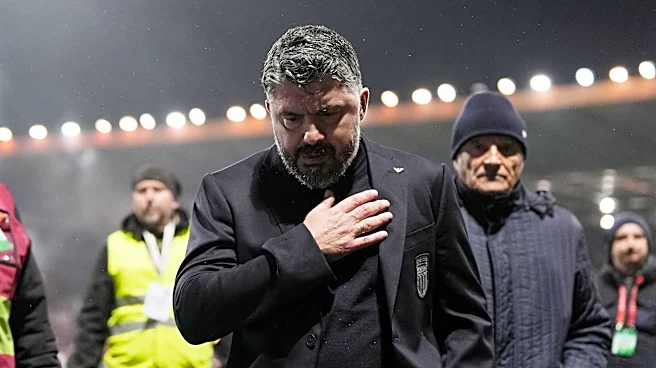
An election has been scheduled for June 22 to elect a new FIGC president, which will be a crucial step in determining the future direction of Italian soccer. Gravina is expected to attend a hearing in Italy's parliament to discuss the wellbeing of Italian soccer. The new leadership will be tasked with revitalizing the national team and preparing Italy's stadiums for the 2032 European Championship, which Italy is slated to co-host with Turkey. Potential candidates to replace Gattuso as coach include Roberto Mancini, Simone Inzaghi, Antonio Conte, and Massimiliano Allegri. The changes in leadership and coaching staff could lead to new strategies and approaches to improve the performance of the national team.
Beyond the Headlines
The resignation of Gravina and Buffon highlights the broader challenges facing Italian soccer, including the need for structural reforms and the promotion of Italian players in Serie A. The situation raises questions about the effectiveness of current policies and the need for new regulations to support the development of local talent. The upcoming changes in leadership could lead to a shift in focus towards long-term development and sustainability in Italian soccer. The potential impact on Italy's ability to host the 2032 European Championship also underscores the importance of infrastructure development and investment in sports facilities.