



What's Happening?
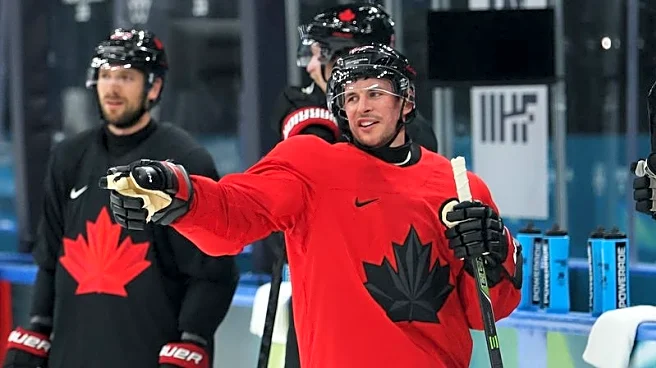
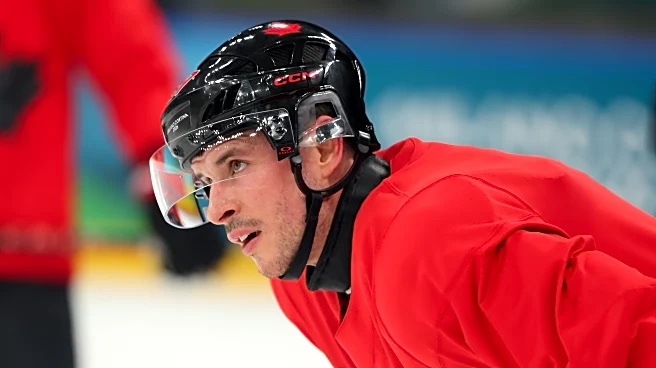
Nick Suzuki, captain of the Montreal Canadiens, is increasingly being recognized as one of the NHL's top centers. Known for his excellent production rate and defensive skills, Suzuki has become a pivotal player for the Canadiens. As of 2025, he ranks seventh in the scoring charts with 95 points in 82 games, trailing only Nathan MacKinnon and Connor McDavid among Canadian players. His leadership and ability to enhance his teammates' performance have been crucial for the team. Despite his achievements, there is ongoing debate about his inclusion in the Canadian Olympic team for the upcoming Milan games.
Why It's Important?
Suzuki's performance is significant for the Montreal Canadiens and the broader NHL landscape. His ability to excel both offensively and defensively
makes him a valuable asset, potentially influencing team strategies and player development. For the Canadiens, having a player of Suzuki's caliber boosts their competitive edge and marketability. His potential inclusion in the Olympic team could further elevate his profile and bring attention to the Canadiens' talent pool. This situation also highlights the competitive nature of team selections for international events, where even top performers face scrutiny.
What's Next?
The next steps involve monitoring Suzuki's performance as the NHL season progresses and the finalization of the Canadian Olympic team roster. Stakeholders, including team management and national selectors, will need to assess Suzuki's contributions and potential impact on the international stage. Fans and analysts will likely continue to debate his merits, influencing public opinion and possibly affecting selection decisions. The outcome could have implications for Suzuki's career trajectory and the Canadiens' future strategies.
Beyond the Headlines
Suzuki's situation underscores broader themes in professional sports, such as the balance between individual talent and team dynamics. It also raises questions about the criteria for national team selections and the role of public and media influence in these decisions. Long-term, Suzuki's career could serve as a case study in player development and the impact of leadership roles on young athletes.