


What's Happening?
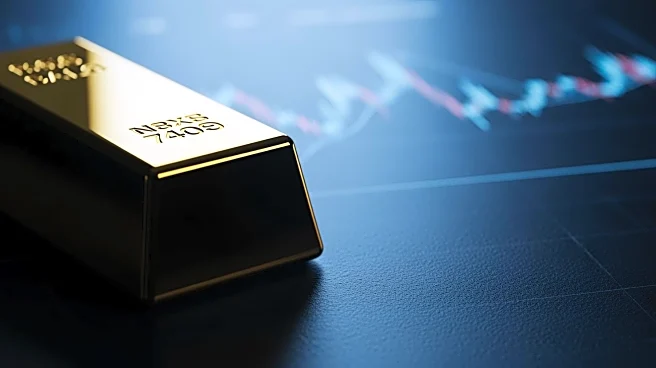
Gold prices have fallen to a one-month low as concerns over interest rates outweigh the metal's traditional safe-haven demand. According to IndexBox, the price of gold has dropped by over 6% since a recent peak, influenced by ongoing inflation worries
and geopolitical tensions. Despite this decline, gold has seen a 15% increase since the start of the year, driven by its appeal as a wealth preservation asset amid economic instability. Market participants are closely watching an upcoming policy meeting where central bank officials are expected to discuss inflation and labor market conditions, which could impact future monetary policy decisions.
Why It's Important?
The fluctuation in gold prices reflects broader economic uncertainties, particularly regarding inflation and interest rates. As a non-yielding asset, gold's attractiveness can diminish when interest rates rise, as investors seek higher returns elsewhere. The current market dynamics highlight the delicate balance between safe-haven demand and the pressures of inflation and monetary policy. These factors are crucial for investors and policymakers as they navigate economic challenges and seek to maintain financial stability. The outcome of the central bank's policy meeting could have significant implications for gold prices and broader market trends.
What's Next?
Investors will be keenly observing the central bank's policy meeting for insights into future interest rate decisions. Any indication of rate hikes could further impact gold prices and influence investment strategies. Additionally, ongoing geopolitical tensions and supply chain issues may continue to affect market dynamics. Stakeholders in the precious metals market will need to remain vigilant and adaptable to changing conditions, balancing short-term fluctuations with long-term investment goals.