






What's Happening?
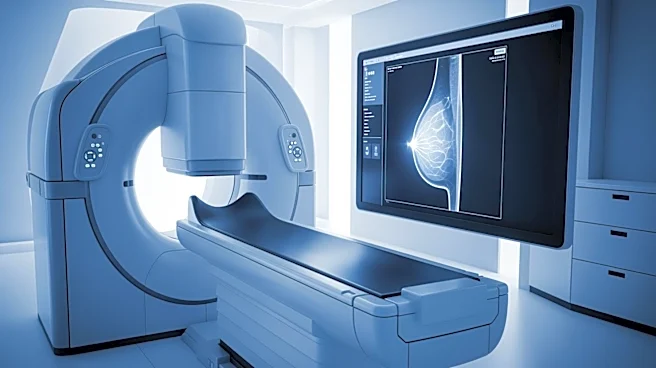
GE HealthCare has announced an expanded collaboration with DeepHealth, a subsidiary of RadNet, to advance AI-powered mammography tools. This partnership aims to enhance breast cancer screening by integrating DeepHealth's AI-driven Breast Suite with GE HealthCare's
Senographe Pristina mammography system. The collaboration, initially launched in 2024, focuses on improving image interpretation and operational efficiency in breast cancer detection. The new phase will extend these solutions internationally, offering a second reader workflow and expanding access to DeepHealth's breast cancer solutions. The Breast Suite includes applications like ProFound Pro and Safeguard Review, which have demonstrated a 21% increase in breast cancer detection rates in the U.S. The initiative is part of GE HealthCare's commitment to advancing women's health through precision care and AI technology.
Why It's Important?
This collaboration is significant as it leverages AI to improve early detection of breast cancer, potentially saving lives through more accurate and timely diagnoses. The integration of AI tools in mammography can enhance diagnostic confidence and reduce the anxiety associated with inconclusive exams. By expanding these technologies globally, GE HealthCare and DeepHealth aim to standardize breast cancer screening, making it more accessible and efficient. This development could lead to a shift in how breast cancer is detected and managed, offering healthcare providers better tools to deliver personalized care. The increased detection rates reported in the U.S. highlight the potential for these technologies to improve outcomes for women worldwide.
What's Next?
GE HealthCare plans to showcase its latest advancements in breast imaging at the Society of Breast Imaging's 2026 Breast Cancer Imaging Symposium. The company will continue to develop and distribute new applications within the Breast Suite, designed to be compatible with its mammography systems. As the collaboration progresses, healthcare providers can expect further enhancements in AI-driven breast cancer screening tools, potentially leading to broader adoption and integration into existing healthcare systems. The focus will remain on improving early detection and providing clinicians with the tools needed for more confident decision-making.