


What's Happening?
Passover, a major Jewish holiday, begins this week, commemorating the liberation of the Israelites from slavery in Egypt. The holiday, which lasts for eight days in most places, is marked by various traditions, including ceremonial dinners known as Seders.
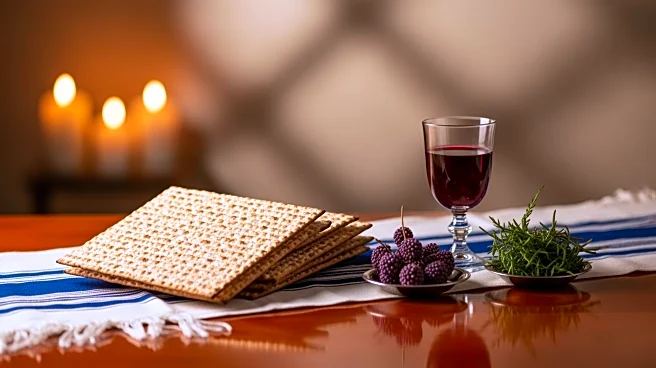
These dinners feature symbolic foods such as matzah, herbs, eggs, and wine, and involve the recitation of the Haggadah, which tells the story of the Israelites' exodus. Families also engage in a thorough cleaning of their homes to remove 'chametz' or leavened products. This year, Passover coincides with the Christian Holy Week, adding a layer of interfaith significance to the period.
Why It's Important?
Passover is a time of reflection and celebration for Jewish communities, emphasizing themes of freedom and resilience. It serves as a reminder of historical struggles and triumphs, fostering a sense of identity and continuity among Jewish people. The holiday's overlap with Christian Holy Week this year may encourage interfaith dialogue and understanding. Additionally, Passover's emphasis on family gatherings and traditions can strengthen community bonds and cultural heritage. In a broader context, the holiday highlights the importance of religious freedom and the preservation of cultural practices in a diverse society.
What's Next?
As Passover progresses, Jewish families will continue to observe various traditions, culminating in the celebration of the Mimouna festival in some communities. This period may also see increased interfaith activities and discussions, particularly in areas with diverse religious populations. Looking ahead, the themes of Passover may inspire broader conversations about freedom, justice, and cultural preservation in contemporary society.