



What's Happening?
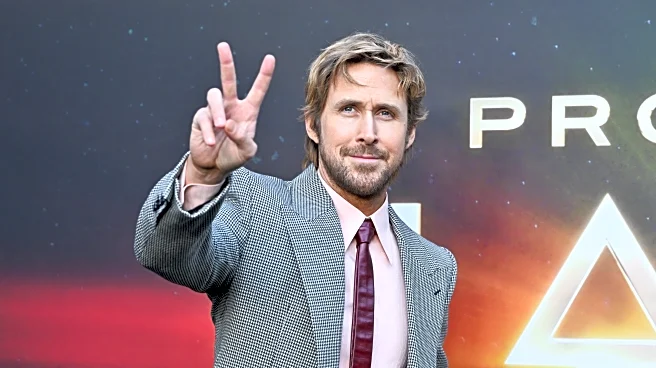
The film 'Project Hail Mary,' directed by Christopher Miller and Phil Lord, has achieved significant success at the box office, grossing $80.6 million domestically. This marks the second-largest opening for a non-franchise film in the past decade, following
'Oppenheimer.' The film, based on Andy Weir's novel, features Ryan Gosling as an astronaut who befriends an alien to save their planets from a solar catastrophe. Critics and audiences have praised the film for its sincerity, optimism, and reliance on practical effects. The film's success is attributed to its traditional storytelling, which contrasts with the current trend of over-optimized and heavily edited films.
Why It's Important?
The success of 'Project Hail Mary' underscores a potential shift in audience preferences towards films that prioritize sincerity and practical effects over digital enhancements. This could influence Hollywood studios to reconsider their production strategies, focusing more on storytelling and character development rather than relying solely on visual effects. The film's performance also suggests that audiences appreciate films that challenge them intellectually, as seen with other successful science-heavy films like 'Oppenheimer.' This trend could lead to a resurgence of films that trust audiences' intelligence and offer more authentic cinematic experiences.
What's Next?
The film industry may observe the success of 'Project Hail Mary' and consider integrating its lessons into future projects. Studios might explore more traditional storytelling methods and practical effects to meet audience demand for authenticity. Additionally, the film's success could encourage filmmakers to create more science-based narratives that engage viewers intellectually. As the industry evolves, it will be interesting to see if other studios follow suit and how this might impact the types of films produced in the coming years.