
What's Happening?
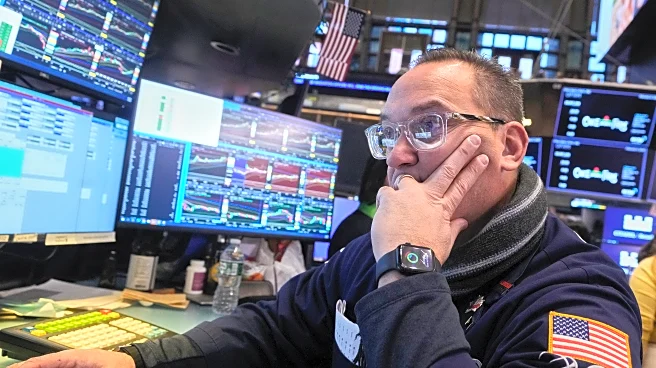
U.S. Treasury yields remained relatively unchanged as investors considered the Federal Reserve's future interest rate path following stronger-than-expected GDP data. The U.S. economy grew by 4.3% in the third
quarter, its fastest pace in two years, complicating the Fed's decision-making on interest rates. National Economic Council Director Kevin Hassett, a potential successor to Fed Chair Jerome Powell, criticized the Fed for not reducing rates quickly enough compared to other central banks. In contrast, Cleveland Fed President Beth Hammack suggested maintaining current rates due to inflation concerns. The CME FedWatch Tool indicates that most investors expect rates to remain unchanged until April, when further reductions may occur.
Why It's Important?
The stability of Treasury yields reflects investor uncertainty about the Fed's next moves in response to economic growth and inflation. The Fed's interest rate decisions are crucial for financial markets, influencing borrowing costs and investment strategies. The divergence in views between Hassett and Hammack underscores the complexity of balancing economic growth with inflation control. The Fed's actions will have significant implications for the U.S. economy, affecting everything from consumer spending to corporate investment. As the economy continues to grow, the Fed's ability to manage inflation without stifling growth will be closely scrutinized.
What's Next?
With the bond markets closing early for the holidays, investors will continue to monitor economic indicators and Fed communications for clues about future rate decisions. The upcoming months will be critical as the Fed assesses the impact of economic growth on inflation and employment. Any changes in the Fed's policy stance could lead to shifts in market expectations and investor behavior. The potential nomination of a new Fed Chair could also influence the central bank's approach to monetary policy, particularly in terms of interest rate adjustments.