






What's Happening?
The National Football Foundation has unveiled its annual ballot for the College Football Hall of Fame, set for induction in December 2027. This year's list includes over 200 candidates, featuring 33 consensus All-Americans, several Heisman Trophy winners,
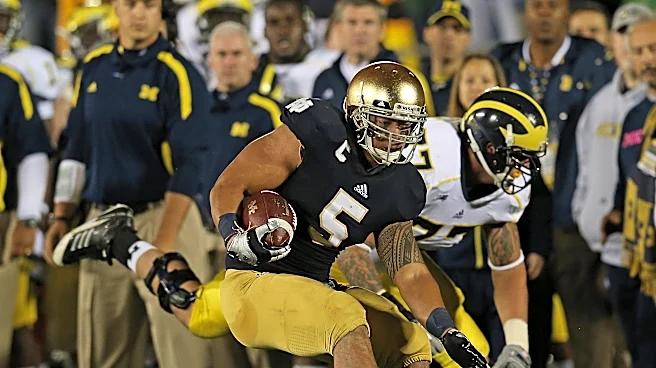
and numerous national champions. The ballot presents a challenging selection process due to the high caliber of nominees, including notable figures such as Cam Newton, Robert Griffin III, and Kellen Moore. The list also highlights defensive standouts like Terrell Suggs and Manti Te'o. The inclusion of these players underscores their significant contributions to college football history, with many having left a lasting impact on the sport.
Why It's Important?
The release of the Hall of Fame ballot is a significant event in college football, as it honors players and coaches who have made substantial contributions to the sport. Induction into the Hall of Fame is a prestigious recognition that cements a player's or coach's legacy. This year's ballot is particularly noteworthy due to the inclusion of several high-profile athletes and coaches who have shaped the game. The selection process will be closely watched by fans and analysts, as it reflects the evolving criteria and values within college football. The outcome could influence future nominations and the historical narrative of the sport.
What's Next?
The next steps involve the voting process, where members of the National Football Foundation will cast their votes to determine the inductees. The results will be announced later in the year, leading up to the induction ceremony in December 2027. The selection process may spark debates among fans and analysts regarding the merits of different candidates. Additionally, the inclusion of certain players and coaches could prompt discussions about the criteria for Hall of Fame induction and the recognition of diverse contributions to the sport.
Beyond the Headlines
The Hall of Fame ballot not only highlights individual achievements but also reflects broader trends in college football, such as the increasing recognition of diverse playing styles and strategic innovations. The inclusion of players from various eras and backgrounds showcases the sport's evolution and the impact of different coaching philosophies. This year's ballot may also influence future discussions about the role of college football in American culture and its significance as a platform for athletic and personal development.