









What's Happening?
As global disruptions such as surging fuel prices and airspace closures due to geopolitical tensions continue to challenge the airline industry, alliances and partnerships have become increasingly vital. Airlines are leveraging these relationships not
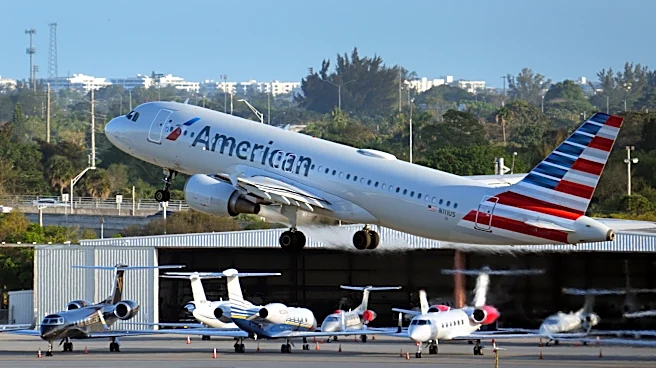
just for loyalty programs but as operational safety nets. This allows them to reroute passengers, share demand flows, and stabilize long-haul economics. At the Aviation Festival Americas conference, industry leaders highlighted the importance of these partnerships. For instance, American Airlines relies heavily on partner feeds for profitability on long-haul routes, with connections from British Airways, Iberia, Japan Airlines, and Qantas. Recent airspace disruptions have further underscored the value of these partnerships, as airlines reroute passengers through partner hubs. Executives argue that while joint ventures offer deep cooperation in specific regions, alliances provide a broader brand and customer promise.
Why It's Important?
The significance of airline alliances and partnerships lies in their ability to provide resilience and flexibility during crises. As airlines face operational challenges, these partnerships help maintain network reach and economic stability. For long-haul airlines, partnerships extend their reach beyond their own networks, offering more connections and visibility. This is crucial for maintaining profitability and customer satisfaction. The focus is shifting towards improving the customer journey through technology and personalization, making alliance partners almost interchangeable. For smaller carriers, partnerships can be the difference between success and failure on certain routes, highlighting their critical role in the industry's sustainability.
What's Next?
Looking ahead, airlines are expected to continue strengthening their partnerships to enhance operational flexibility and customer experience. As geopolitical tensions and economic uncertainties persist, these alliances will likely play a crucial role in navigating future disruptions. Airlines may also focus on integrating technology to create seamless experiences across networks, further blurring the lines between alliance partners. Smaller carriers will continue to seek interline and codeshare agreements to expand their reach and ensure route viability. The industry will likely see a continued emphasis on removing friction from the customer journey, making partnerships an integral part of strategic planning.