







What's Happening?
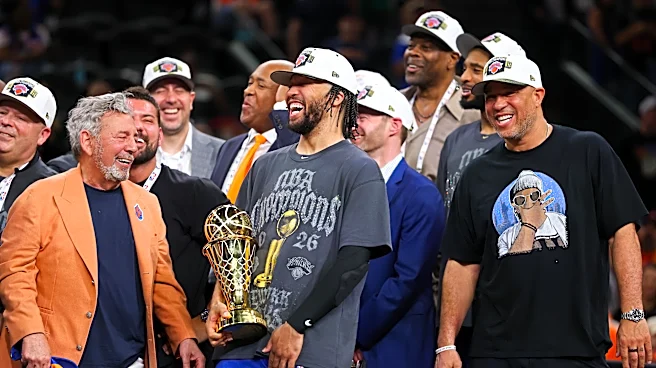
Jalen Brunson, a key player for the New York Knicks, made a significant financial sacrifice by taking a $113 million pay cut, which played a crucial role in the team's recent NBA championship victory. This decision allowed the Knicks to have more financial flexibility,
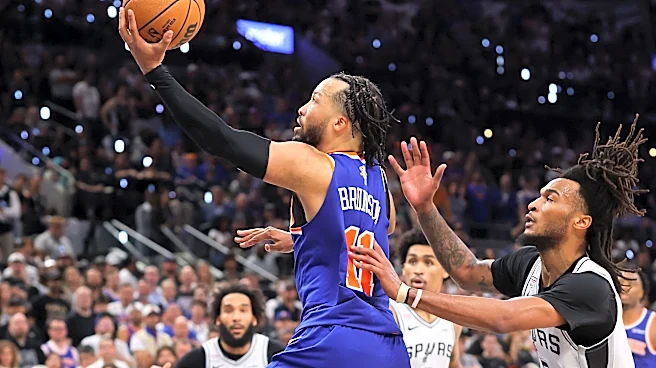
ultimately contributing to their success. Head coach Mike Brown praised Brunson for his understanding of what it takes to win, highlighting the guard's selflessness and commitment to the team's goals. Brunson's contract decision set a new standard for the team, and his performance on the court was described as exceptional. Despite being eligible for a five-year, $269 million extension in 2024, Brunson opted for a four-year, $156.6 million deal, prioritizing the team's needs over personal financial gain.
Why It's Important?
Brunson's decision to accept a lower salary underscores the importance of financial strategy in building a successful sports team. By freeing up salary cap space, the Knicks were able to invest in other key players and resources, ultimately leading to their first NBA title since 1973. This move highlights the potential impact of individual sacrifices on team success, setting a precedent for other players and teams in the league. Brunson's actions may inspire other athletes to consider similar sacrifices for the greater good of their teams, potentially reshaping contract negotiations and team dynamics in the NBA.
What's Next?
Following the Knicks' championship win, the team is likely to focus on maintaining their competitive edge by leveraging the financial flexibility gained from Brunson's pay cut. This could involve strategic player acquisitions or contract extensions to strengthen the roster further. The success of this approach may influence other teams to adopt similar strategies, potentially leading to a shift in how NBA teams manage their salary caps and player contracts. Additionally, Brunson's role in the team's success may lead to increased recognition and opportunities for leadership within the organization.
Beyond the Headlines
Brunson's decision to prioritize team success over personal financial gain raises questions about the balance between individual and collective goals in professional sports. This scenario highlights the ethical considerations athletes face when negotiating contracts and the potential long-term benefits of prioritizing team success. The Knicks' victory, facilitated by Brunson's sacrifice, may prompt discussions about the role of financial incentives in sports and how they can be structured to promote both individual and team achievements.