




What's Happening?
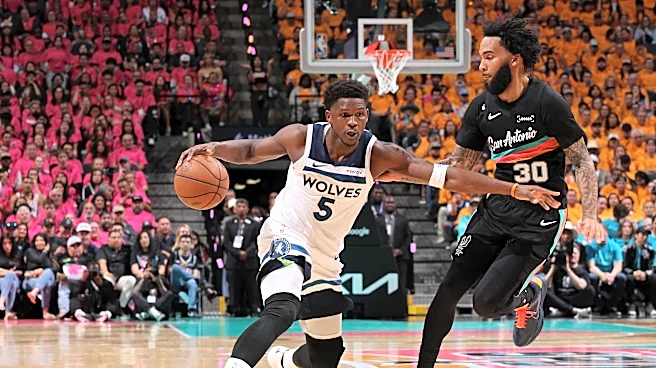
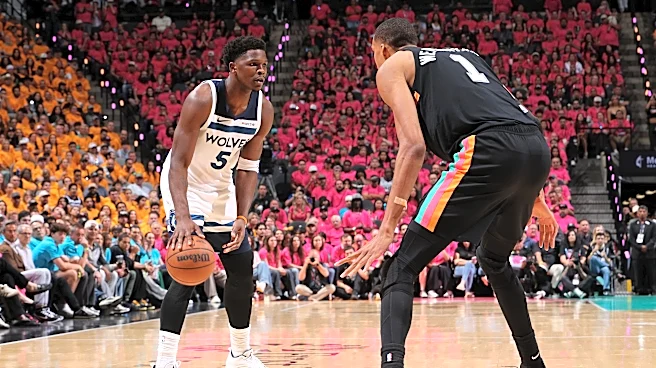
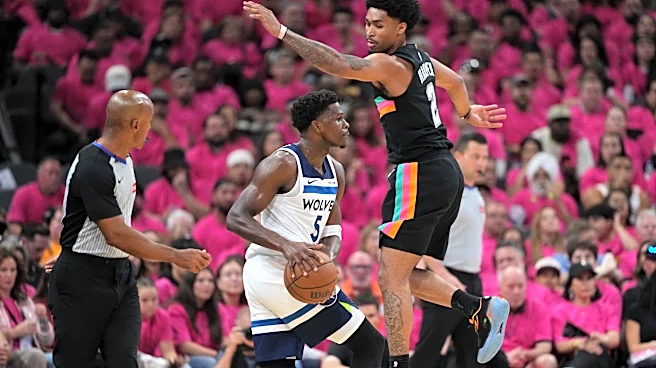
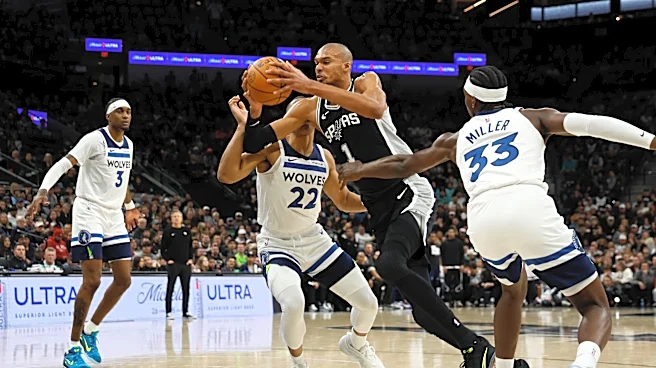
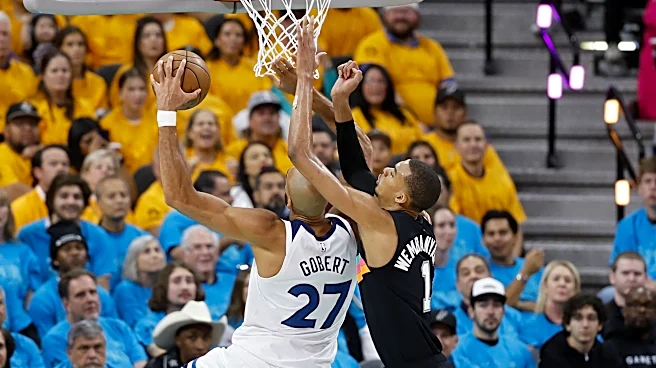
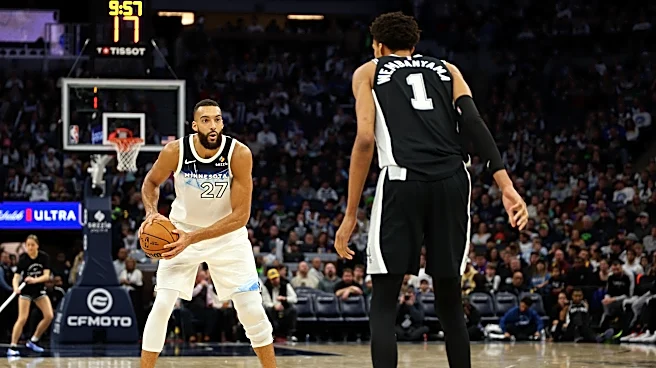
In a thrilling Western Conference Semifinals Game 1, the San Antonio Spurs faced off against the Minnesota Timberwolves. Despite a record-setting performance by Spurs' forward Victor Wembanyama, the team narrowly lost to the Timberwolves with a final score
of 104-102. Wembanyama, known for his defensive prowess, achieved an NBA playoff record by blocking 12 shots, contributing to a triple-double that included 11 points and 15 rebounds. However, his offensive performance was less effective, as he made only 5 of 17 field goal attempts and missed all eight of his three-point shots. The game was tightly contested, with the Timberwolves executing a crucial 7-0 run to take the lead in the final moments. Key contributions from Timberwolves' players Mike Conley and Naz Reid, who were instrumental in maintaining the lead, helped secure the victory.
Why It's Important?
This game highlights the impact of individual performances in high-stakes playoff scenarios and underscores the importance of team dynamics. Victor Wembanyama's record-breaking defensive effort showcases his potential as a game-changer in the NBA. However, the Spurs' inability to capitalize on his defensive contributions due to offensive inefficiencies illustrates the challenges teams face in balancing individual brilliance with overall team performance. For the Timberwolves, the victory sets a positive tone for the series, demonstrating their ability to execute under pressure and leverage key players like Conley and Reid effectively. This game could influence future strategies and player matchups as the series progresses.
What's Next?
As the series continues, both teams will likely adjust their strategies. The Spurs may focus on improving their offensive efficiency to complement Wembanyama's defensive capabilities. Meanwhile, the Timberwolves will aim to maintain their momentum and capitalize on their ability to perform in clutch situations. The outcome of this series could have significant implications for both teams' playoff trajectories and influence their off-season decisions regarding player development and acquisitions.