







What's Happening?
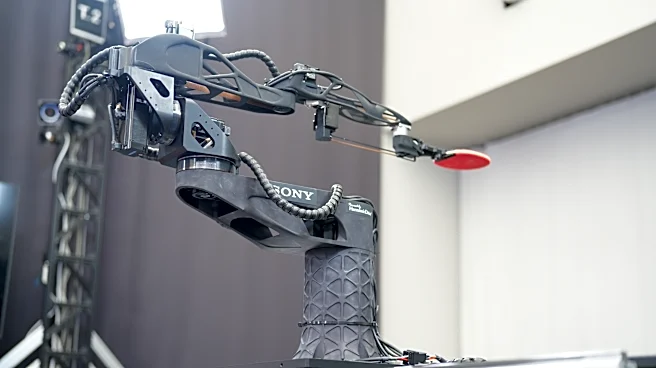
In a significant development in AI and robotics, a robot named Ace, developed by Sony, has defeated expert-level human players in table tennis. This achievement was reported in a study published in the scientific journal Nature. Ace's victory marks a milestone
in AI, showcasing its ability to perform complex, real-time interactive tasks. The robot uses nine synchronized cameras and three vision systems to track the ball, employing a high-speed perception system and model-free reinforcement learning. This development follows another recent achievement where a humanoid robot named Lightning set a new half-marathon record in Beijing.
Why It's Important?
The success of Ace in table tennis represents a broader trend of AI and robotics advancing to levels where they can compete with and even surpass human abilities in certain tasks. This has significant implications for various industries, including manufacturing, sports, and entertainment, where robots could take on roles traditionally held by humans. The ability of AI to perform tasks requiring rapid decision-making and precision could lead to increased efficiency and productivity. However, it also raises concerns about job displacement and the ethical implications of AI surpassing human capabilities.
What's Next?
The advancements in AI and robotics suggest a future where robots could play a more prominent role in various sectors. In sports, this could lead to robots participating in more competitive events, potentially changing the nature of sports competitions. In industries like manufacturing, AI-driven robots could enhance production processes. The development of AI systems like Ace also highlights the need for ongoing discussions about the ethical and societal impacts of AI, including the potential for job displacement and the need for regulations to ensure responsible AI development.