





What's Happening?
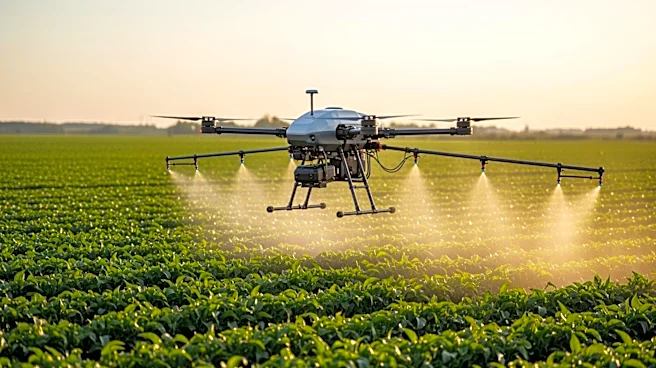
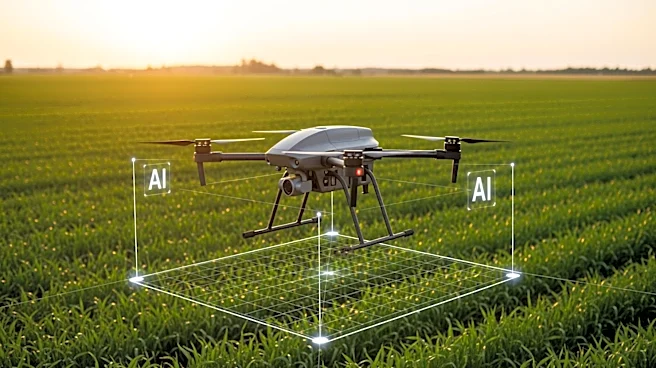
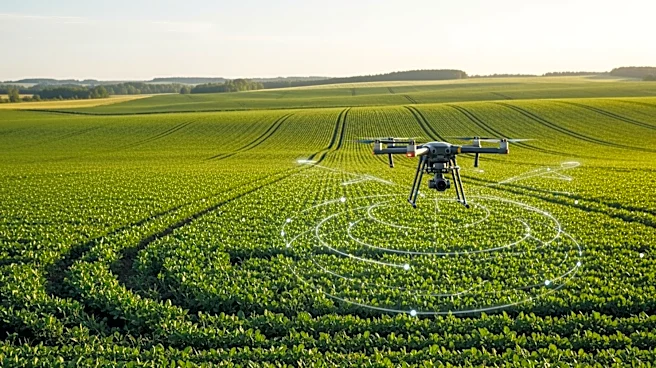
Geodash Aerosystems, a joint venture between DroneDash Technologies and Geonet, is set to revolutionize industrial agriculture with its new AI-driven precision spraying drones. These drones, designed for large-scale farming operations, eliminate the need
for manual pre-mapping by using real-time AI vision and RTK positioning to navigate and adapt during flights. This innovation promises faster deployment, reduced operating costs, and continuous agronomic intelligence. The drones are equipped to perform tasks such as canopy density analysis, crop stress detection, and spray effectiveness validation, providing valuable data to plantation managers.
Why It's Important?
The introduction of AI-driven precision spraying drones could significantly enhance the efficiency and effectiveness of agricultural practices in the U.S. By automating and optimizing the spraying process, these drones can reduce labor costs and increase crop yields. The continuous data collection and analysis capabilities offer farmers insights into crop health and environmental conditions, enabling more informed decision-making. This technology could lead to more sustainable farming practices, reducing the environmental impact of agriculture and supporting the industry's adaptation to climate change.
What's Next?
Geodash Aerosystems plans to commercially deploy these drones by Q3 2026, following pilot deployments and system validation. As the technology gains traction, it may prompt further advancements in agricultural automation and AI applications. Regulatory bodies will likely need to establish guidelines for the use of such drones, ensuring safety and compliance. The success of this initiative could encourage other companies to invest in similar technologies, fostering innovation and competition in the agricultural sector.
Beyond the Headlines
The adoption of AI-driven drones in agriculture raises questions about the future of farming labor and the skills required in the industry. As technology becomes more integrated into farming practices, there may be a shift towards more technical roles, requiring new training and education programs. Additionally, the reliance on AI and data-driven decision-making could lead to ethical considerations regarding data privacy and the potential for technology to replace human judgment in critical agricultural decisions.