



What's Happening?
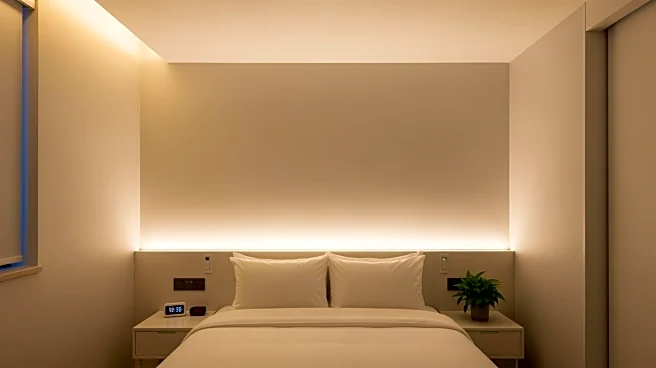
Zedwell, a hospitality brand under Criterion Hospitality, is innovating the hotel industry by offering windowless rooms and ultra-compact capsules. This approach is part of an adaptive reuse strategy, utilizing underutilized real estate in London, such as former arcades and car parks. The concept focuses on providing the essentials for rest, stripping away non-essentials like windows and TVs to reduce costs and visual clutter. The rooms, referred to as 'cocoons,' are designed for deep rest with features like soundproof doors and high-quality beds. Zedwell's model emphasizes transparency and convenience, using technology to streamline guest interactions and reduce friction.
Why It's Important?
Zedwell's approach challenges traditional hospitality norms by focusing
on the essentials, which could influence the industry to reconsider what is necessary for guest satisfaction. This model caters to budget-conscious travelers, offering a cost-effective alternative without compromising on the quality of rest. By utilizing underutilized spaces, Zedwell also addresses urban real estate challenges, potentially setting a precedent for sustainable development in dense cities. The use of technology to enhance guest experience and operational efficiency could inspire similar innovations across the hospitality sector, impacting how hotels manage costs and customer interactions.
What's Next?
Zedwell plans to expand its concept with 'Capsules by Zedwell,' offering even smaller accommodations at lower price points. This move aims to tap into a new market of travelers who might not typically stay in hotels, such as those avoiding long commutes or seeking affordable overnight options in expensive cities. The success of this model could lead to further adoption of minimalist hospitality solutions in other urban areas, potentially reshaping the landscape of budget travel accommodations.
Beyond the Headlines
The minimalist approach of Zedwell raises questions about the future of hospitality design and the balance between comfort and cost. As cities become more crowded and real estate more expensive, the demand for innovative, space-efficient solutions like Zedwell's could grow. This trend might also influence consumer expectations, leading to a shift in what travelers prioritize in their accommodations. Additionally, the focus on reducing unnecessary amenities could contribute to more sustainable hospitality practices, aligning with broader environmental goals.