



What's Happening?
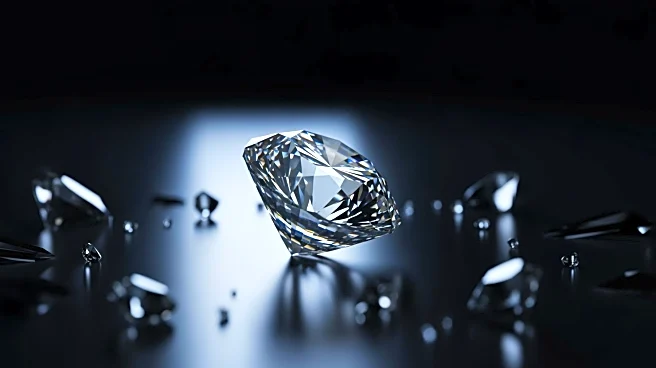
De Beers, Africa's largest diamond miner, reported a significant loss of $511 million for the year, attributed to weak demand from China and U.S. tariff pressures. The company's rough diamond production decreased by 12% to 21.7 million carats as it adjusted
output to align with current market conditions. The downturn in the diamond sector is exacerbated by reduced Chinese luxury demand and the growing market share of laboratory-grown diamonds. Additionally, U.S. tariffs on India, a major diamond cutting hub, have added uncertainty to the supply chain. In response, De Beers has implemented cost control measures, reducing unit costs and capital expenditure to preserve cash and enhance operational efficiency.
Why It's Important?
The financial struggles of De Beers highlight broader challenges in the global diamond industry, which is facing declining demand and increased competition from synthetic diamonds. The economic implications are significant for countries like Botswana, where diamond revenues are crucial for fiscal stability and foreign exchange. The U.S. tariffs on India further complicate the supply chain, affecting global trade dynamics. De Beers' strategic adjustments, including cost reductions and a focus on natural diamond demand, aim to stabilize the company amid these challenges. The situation underscores the need for the diamond industry to adapt to changing consumer preferences and geopolitical factors.
What's Next?
De Beers plans to align its production more closely with market demand, forecasting an output of 21 to 26 million carats for 2026. The company is also pursuing its 'Origins' strategy to boost demand for natural diamonds through marketing and industry agreements. Meanwhile, Anglo American, De Beers' parent company, is progressing with a structured separation process as part of a broader portfolio reshaping. The industry will be watching for potential changes in U.S. trade policy, as a rollback of tariffs could impact future demand and supply chain stability.