


What's Happening?
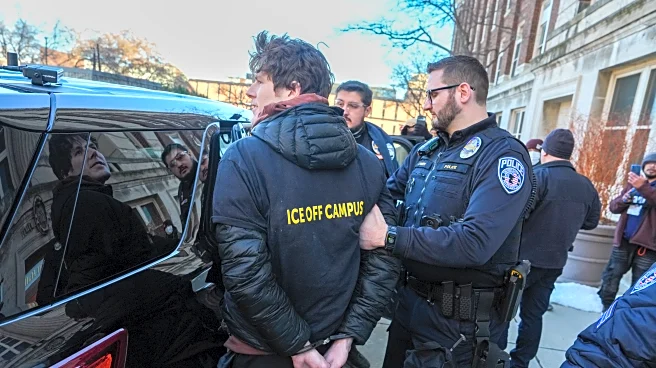
During a pre-Super Bowl concert in San Francisco, Green Day's frontman Billie Joe Armstrong delivered a politically charged message to the audience. At the FanDuel Party Powered by Spotify 2026, Armstrong urged Immigration and Customs Enforcement (ICE) agents to leave their jobs, suggesting that political figures like Kristi Noem, Stephen Miller, JD Vance, and President Trump would eventually abandon them. Armstrong's comments were part of a broader critique of the Trump administration, which he has consistently opposed. He also altered the lyrics of Green Day's songs to reflect his political stance, including changing lines in 'American Idiot' and 'Holiday' to criticize the MAGA agenda and reference Jeffrey Epstein. Green Day is scheduled to perform
at the Super Bowl LX opening ceremony, celebrating 60 years of Super Bowl history.
Why It's Important?
Armstrong's remarks highlight the intersection of music and politics, particularly in high-profile events like the Super Bowl. His call for ICE agents to quit underscores ongoing tensions surrounding immigration policies in the U.S. and reflects broader societal debates about the role of law enforcement agencies. The band's criticism of the Trump administration aligns with a segment of the entertainment industry that has been vocal against certain political figures and policies. This event also illustrates how artists use their platforms to influence public opinion and engage in political discourse, potentially impacting their fan base and the broader public's views on immigration and governance.
What's Next?
Green Day's performance at the Super Bowl LX opening ceremony is expected to draw significant attention, especially given Armstrong's recent comments. The band's continued political activism may provoke reactions from both supporters and critics, potentially influencing public discussions around immigration and political leadership. As the Super Bowl is a major cultural event, any further statements or actions by the band during their performance could amplify their message. Additionally, the response from political figures or ICE itself could shape future interactions between the entertainment industry and government agencies.
Beyond the Headlines
Armstrong's comments and Green Day's political stance raise questions about the role of artists in political activism. The blending of entertainment and politics can lead to increased awareness and dialogue on critical issues, but it also risks polarizing audiences. The ethical implications of using a public platform to influence political opinions are complex, as artists balance their personal beliefs with their professional responsibilities. This event may contribute to a broader trend of musicians and entertainers taking more active roles in political and social movements, potentially reshaping the cultural landscape.