







What's Happening?
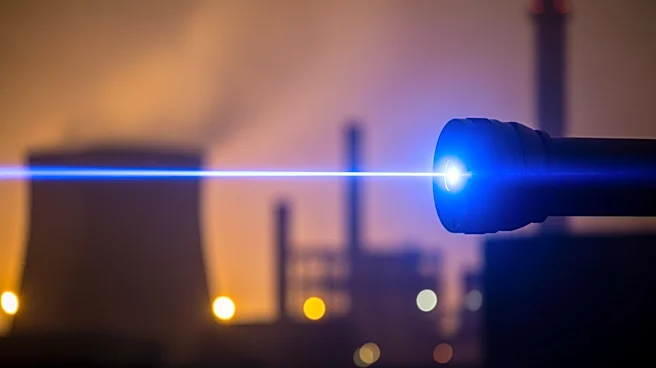
The power industry is increasingly adopting advanced laser-based technologies to enhance emissions monitoring systems. These systems, which utilize quantum cascade and tunable diode lasers, offer more accurate, reliable, and low-maintenance solutions
for continuous emissions monitoring. Traditional systems, which often require multiple analyzers and complex equipment, are being challenged by the diverse fuel sources now used in power generation, such as natural gas, hydrogen, and biofuels. The new laser-based systems can simultaneously measure multiple gas components, including nitrogen oxides, sulfur dioxide, and carbon monoxide, with greater precision. This shift is driven by the need to meet stringent environmental regulations while maintaining reliable and affordable energy production.
Why It's Important?
The adoption of advanced emissions monitoring technologies is crucial for the power industry as it faces increasing regulatory pressures to reduce pollutants. These new systems not only improve measurement accuracy but also reduce operational costs and maintenance needs. By integrating advanced laser technologies, power plants can better comply with environmental standards, avoiding fines and shutdowns. This technological advancement supports the industry's transition to cleaner energy sources, such as hydrogen and biofuels, by providing the necessary tools to accurately monitor and manage emissions. The move towards more sophisticated monitoring systems reflects a broader trend in the industry towards sustainability and regulatory compliance.
What's Next?
As the power industry continues to evolve, further integration of advanced emissions monitoring technologies is expected. Companies may increasingly adopt these systems to ensure compliance with dynamic environmental regulations. The development of more compact and efficient monitoring solutions will likely continue, driven by the need for space-saving and cost-effective installations. Additionally, partnerships with technology providers for lifecycle services and maintenance agreements will become more common, ensuring optimal performance of these systems. The ongoing innovation in emissions monitoring technology will play a critical role in the industry's efforts to reduce its environmental impact and transition to cleaner energy sources.