





What's Happening?
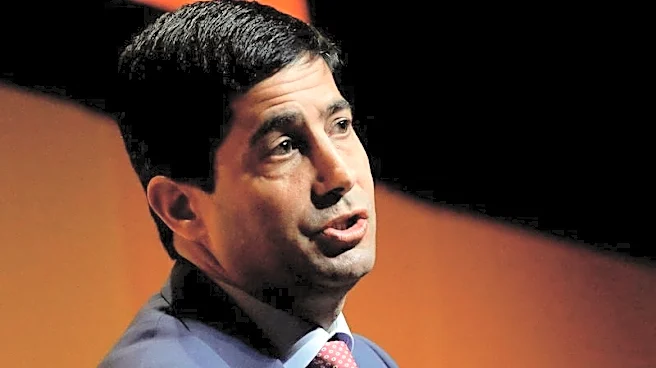
Kevin Warsh, the nominee for the Federal Reserve chair, has disclosed a wide-ranging investment portfolio that includes holdings in SpaceX, Polymarket, and various emerging technologies. According to a newly filed financial disclosure, Warsh's assets
exceed $100 million, with significant investments in the Juggernaut Fund LP, linked to his advisory role at the Duquesne Family Office. His portfolio also includes smaller stakes in numerous innovative ventures through DCM Investments 10 LLC, valued at under half a million dollars. These investments span across AI-driven art, new medical technologies, and decentralized finance platforms, reflecting Warsh's interest in futuristic and potentially transformative industries.
Why It's Important?
Warsh's investment choices highlight a significant shift in focus towards emerging technologies and innovative sectors, which could influence his approach to monetary policy if confirmed as Federal Reserve chair. His involvement in cutting-edge fields like AI and crypto suggests a forward-thinking perspective that may impact regulatory stances on these rapidly evolving industries. This could have broad implications for U.S. economic policy, potentially fostering an environment conducive to technological advancement and innovation. Stakeholders in tech and finance sectors may find Warsh's insights and decisions particularly relevant, as they could shape the regulatory landscape and investment climate.
What's Next?
If confirmed, Warsh's tenure as Federal Reserve chair could usher in new policies that reflect his investment interests, potentially affecting regulatory frameworks for emerging technologies. His approach to monetary policy might prioritize innovation and adaptability, influencing how the Fed addresses challenges posed by digital currencies and AI. Observers will be keen to see how Warsh balances traditional economic principles with the demands of a rapidly changing technological landscape. His confirmation process will likely involve scrutiny of his investment portfolio and its implications for his policy decisions.