




What's Happening?
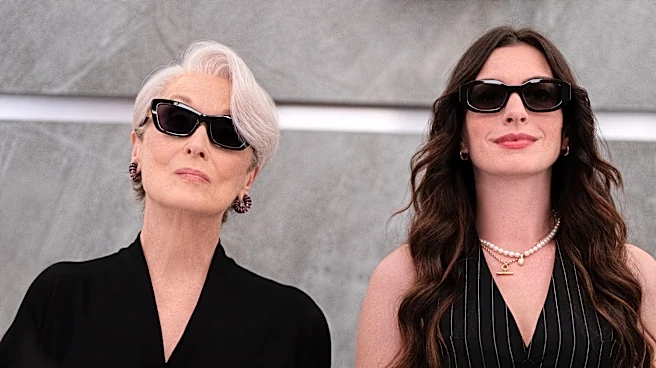
The sequel to 'The Devil Wears Prada' offers a satirical take on the current state of the media industry. The film, set in the world of high fashion and media, reflects the challenges faced by traditional media outlets in the digital age. It features
characters navigating budget cuts, the influence of social media, and the pressures of maintaining editorial independence amidst corporate ownership. The plot includes a tech billionaire interested in acquiring the fictional magazine 'Runway,' drawing parallels to real-world media acquisitions by wealthy individuals. The film highlights the shift in cultural influence from traditional media to digital platforms and influencers.
Why It's Important?
The film's portrayal of the media industry's struggles resonates with ongoing real-world challenges faced by traditional media outlets. As digital platforms continue to dominate, legacy media companies are forced to adapt to new business models and audience expectations. The film's narrative underscores the tension between editorial independence and corporate interests, a theme relevant to current discussions about media ownership and influence. By satirizing these issues, the film invites audiences to reflect on the evolving media landscape and the implications for journalism and public discourse.
Beyond the Headlines
Beyond its entertainment value, 'The Devil Wears Prada 2' raises important questions about the future of journalism and the role of media in society. The film's depiction of media consolidation and the influence of wealthy owners highlights concerns about the concentration of media power and its impact on diversity of thought and representation. As media companies navigate financial pressures and changing consumer habits, the film serves as a cultural commentary on the need for innovation and resilience in the industry.