


What's Happening?
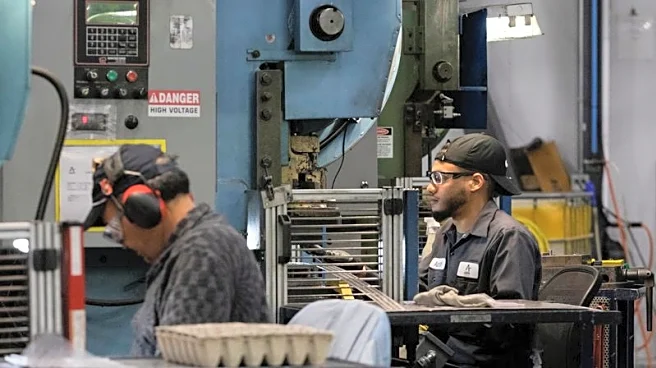
The US manufacturing sector experienced a slowdown in February, marking the weakest expansion in seven months. According to the latest S&P Global US Manufacturing PMI, the index registered 51.6, down from 52.4 in January. This indicates a continued but
slower improvement in operating conditions. The decline is attributed to falling exports, tariff pressures, and severe weather disruptions. New export orders fell for the eighth consecutive month, with tariffs particularly affecting sales to Canada. As a result, manufacturers have increasingly relied on domestic demand. Employment growth in the sector was minimal, with firms cautious about future orders and managing excess capacity. Supply chain issues, including low stock availability and transportation delays, further compounded the challenges.
Why It's Important?
The slowdown in the manufacturing sector is significant as it reflects broader economic challenges, including international trade tensions and domestic economic conditions. The reliance on domestic demand highlights potential vulnerabilities in the US economy if international trade issues persist. The cautious approach to hiring and the decline in backlogs suggest potential stagnation in job growth within the sector. Additionally, the inability to pass on increased costs due to competitive pressures could impact profit margins, affecting the financial health of manufacturing firms. This situation underscores the interconnectedness of global trade policies and domestic economic performance.
What's Next?
Manufacturers are expected to continue navigating these challenges by focusing on domestic markets and managing costs. The sector's outlook may improve if weather disruptions ease and if there is clarity on trade policies. Business sentiment remains optimistic, with expectations of new product launches and expansion plans. However, ongoing uncertainty in the political and trade environment could influence future hiring and investment decisions. Stakeholders will likely monitor these developments closely, as they could have broader implications for the US economy.