
What's Happening?
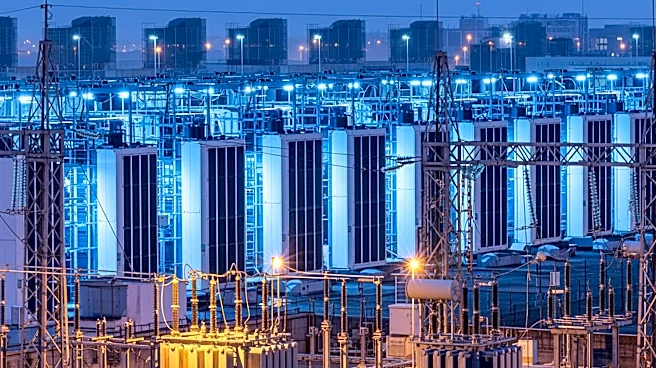
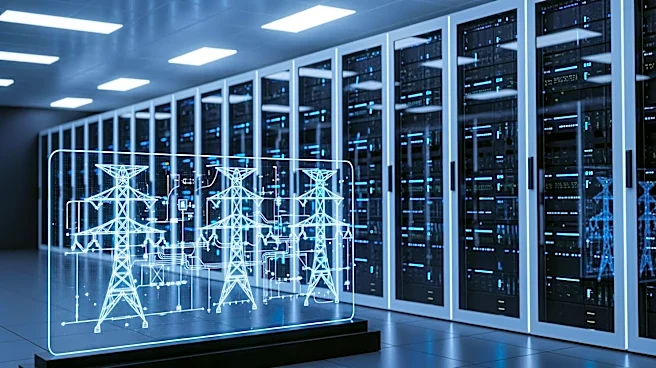
AI training data centers are creating significant challenges for power grid stability due to their massive and unpredictable power consumption. These centers use large numbers of processors that switch
on and off in unison, causing instantaneous power swings that can destabilize both onsite and grid-connected power systems. The unpredictable nature of AI training loads makes them difficult for utilities to manage, leading to potential grid destabilization. To address these challenges, some data centers are using battery energy storage systems (BESS) and microgrid control to stabilize power consumption and improve reliability.
Why It's Important?
The power demands of AI training data centers highlight the need for new approaches to grid management and infrastructure development. The unpredictable power consumption of these centers poses risks to grid stability, potentially leading to widespread outages. Utilities and regulators must adapt to these new demands by implementing measures to stabilize power consumption and ensure grid reliability. The use of BESS and microgrid control offers a potential solution, allowing data centers to manage power consumption more effectively and reduce the risk of grid destabilization. This situation underscores the importance of innovation in energy management to support the growth of AI technology.
What's Next?
As AI training data centers continue to grow, stakeholders will need to develop new strategies for managing power consumption and ensuring grid stability. This may involve investing in advanced energy management technologies, such as BESS and microgrid control, to stabilize power consumption. Utilities and regulators may also need to implement new standards and regulations to address the unique challenges posed by AI training loads. The ongoing evolution of AI technology will require continued collaboration between technology and energy sectors to ensure sustainable growth and grid stability.