
What's Happening?
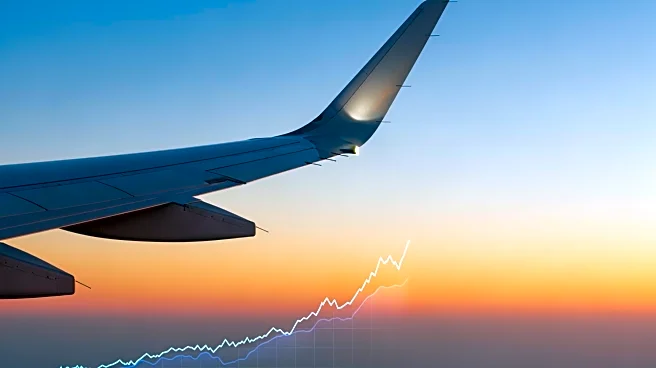
United Airlines CEO Scott Kirby has announced that the airline may need to increase fares by 20% to offset rising fuel costs, which could amount to $11 billion in expenses. Despite the potential for higher fares to impact demand, Kirby believes that premium
demand will remain strong even if the economy weakens. United is positioning itself to capitalize on opportunities to acquire assets from distressed competitors if the economic situation worsens. The airline recently announced a significant aircraft order, which includes more business class seats, indicating a focus on catering to high-spend travelers.
Why It's Important?
The potential fare increases highlight the ongoing challenges airlines face due to fluctuating fuel prices, which can significantly impact operational costs and profitability. For consumers, higher fares could lead to reduced travel affordability, particularly for budget-conscious travelers. However, United's focus on premium services suggests a strategic shift towards attracting high-spend customers who may be less sensitive to price changes. This approach could help the airline maintain revenue streams despite broader economic uncertainties. The situation underscores the importance of strategic planning and adaptability in the airline industry, as companies navigate complex market dynamics.
What's Next?
If fuel prices remain high, United and other airlines may implement fare increases, potentially affecting travel demand. The industry will likely continue to monitor economic conditions and adjust strategies accordingly. United's readiness to acquire assets from distressed competitors could lead to consolidation in the airline industry, impacting competition and market dynamics. Additionally, the airline's focus on expanding premium services may influence other carriers to adopt similar strategies, potentially reshaping the competitive landscape. Stakeholders, including consumers and industry analysts, will be watching closely for further developments and their implications.