



What's Happening?
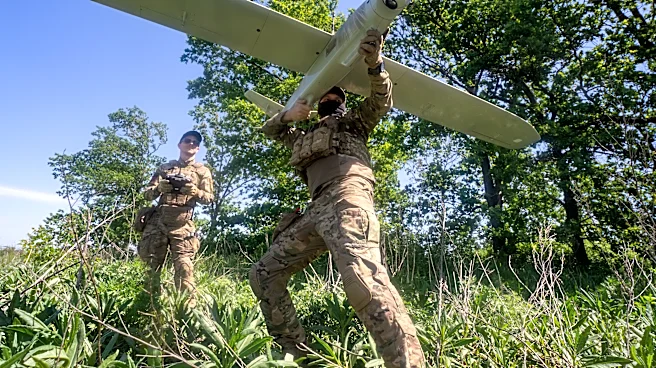
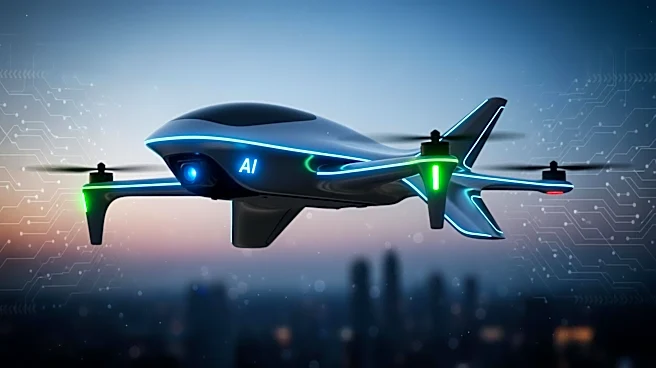
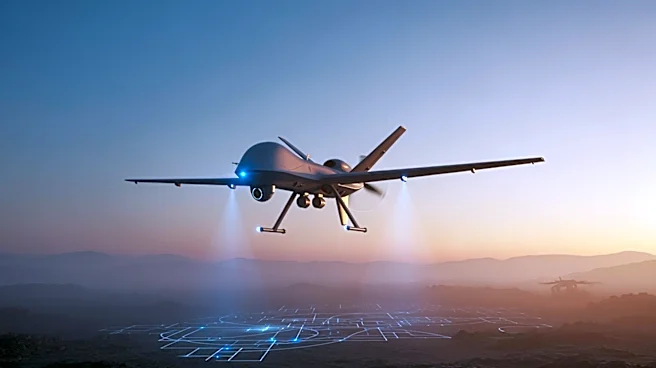
Brian Streem, CEO of Vermeer, has developed a Visual Positioning System (VPS) to enhance the navigation and operational capabilities of AI-powered drones. This technology aims to address the vulnerabilities of drones to jamming and spoofing by enemy signals,
which can lead to the destruction of these expensive assets. Streem's VPS uses electro-optical or infrared cameras connected to an onboard NVIDIA edge computer, allowing drones to perform real-time terrain matching, celestial navigation, and terminal guidance. The system is already in use in Ukraine, and Streem believes it could save the U.S. Department of War significant costs by updating American drones with this technology. Despite the high cost of approximately $20,000 per drone, Streem argues that the investment is justified by the enhanced capabilities and reduced risk of loss.
Why It's Important?
The development of Streem's VPS technology is significant as it addresses a critical weakness in modern warfare: the susceptibility of drones to electronic interference. As drones become increasingly integral to military operations, ensuring their reliability and effectiveness is crucial. This technology not only enhances the strategic capabilities of drones but also potentially reduces the financial burden on military budgets by preventing the loss of expensive equipment. The implementation of such advanced systems could shift the dynamics of military engagements, providing a technological edge to forces equipped with these enhanced drones. Furthermore, the success of this technology in Ukraine suggests its potential applicability in other conflict zones, potentially influencing global military strategies.
What's Next?
The next steps involve the potential adoption of Streem's VPS technology by the U.S. military and other allied forces. This could lead to a broader deployment of enhanced drones in various military operations, potentially setting a new standard for drone technology in warfare. Additionally, as the technology proves its effectiveness, there may be increased interest from other sectors, such as commercial and civilian applications, where reliable drone navigation is critical. The ongoing development and refinement of this technology could also spur further innovations in AI and autonomous systems, driving advancements in both military and civilian drone applications.