





What's Happening?
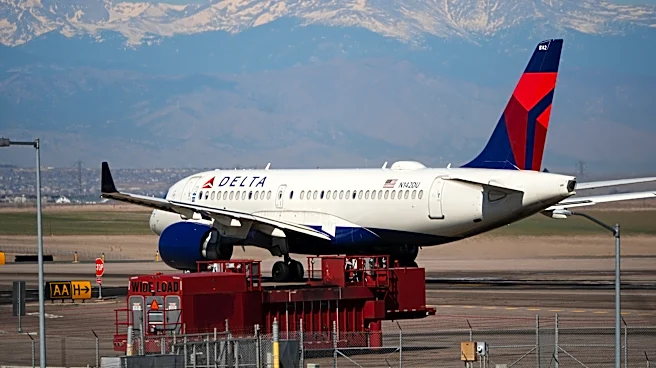
Delta Air Lines has announced adjustments to its capacity growth plans due to a surge in jet fuel prices, driven by geopolitical tensions in the Middle East. The airline has decided to pull all planned capacity growth for the June quarter, reducing supply
by about 3.5 percentage points. This decision comes as Delta faces increased operational costs, with jet fuel prices nearly doubling since late February. Despite strong travel demand, the airline is cautious about updating its full-year profit outlook due to the uncertainty surrounding fuel prices. Delta's CEO, Ed Bastian, highlighted the need to recover a portion of the higher fuel costs through fare increases and ancillary charges.
Why It's Important?
The rising jet fuel prices pose a significant challenge for airlines, as fuel typically accounts for a substantial portion of operating costs. Delta's decision to adjust its capacity growth reflects the broader industry's struggle to manage these costs while maintaining profitability. The situation underscores the vulnerability of airlines to external economic shocks and the need for strategic adjustments to navigate such challenges. For consumers, this could mean higher ticket prices and additional fees as airlines attempt to offset increased costs. The industry's response to these challenges could lead to structural changes, with potential implications for competition and market dynamics.
What's Next?
As Delta and other airlines navigate the current fuel price environment, further strategic adjustments may be necessary. Airlines might continue to explore cost-cutting measures, such as reducing less profitable routes and increasing operational efficiencies. The potential for industry consolidation remains, as weaker airlines may seek partnerships or mergers to strengthen their financial positions. Regulatory bodies will likely monitor these developments closely, ensuring that any industry changes do not adversely affect competition or consumer interests.