








What's Happening?
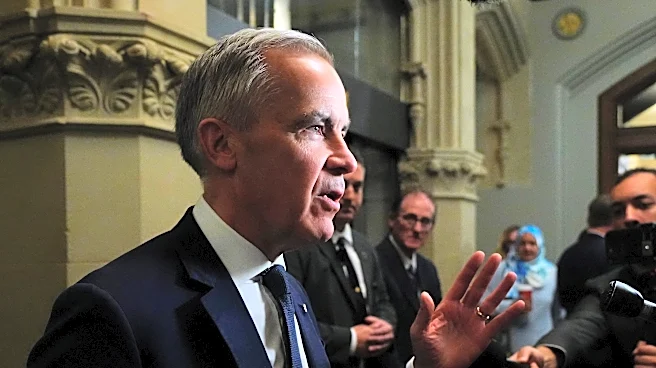
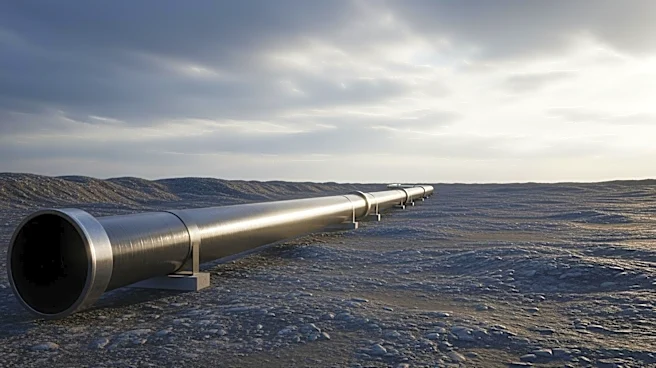
The Alberta pipeline agreement, led by Prime Minister Mark Carney, is primarily a strategic political maneuver rather than a funded infrastructure project. The deal is designed to signal that Canada is open for business and to diversify trade beyond the U.S.
market. While the agreement suggests a framework for a potential pipeline from Alberta to the west coast, it lacks the necessary financial backing, permits, and indigenous consent to become a reality. The deal aims to open discussions on broader trade topics such as critical minerals and renewable energy, rather than focusing solely on crude oil transportation.
Why It's Important?
This agreement highlights Canada's need to diversify its trade partners amid increasing U.S. market instability. By positioning itself as a reliable supplier of strategic resources, Canada seeks to strengthen its economic ties with other countries. However, the lack of financial and logistical support for the pipeline raises questions about the feasibility of such projects in Canada. The deal also reflects the ongoing challenges in balancing environmental concerns with economic development, as it faces opposition from indigenous groups and environmentalists.
What's Next?
The future of the pipeline remains uncertain, with significant hurdles such as obtaining indigenous consent and financial investment still unresolved. The Canadian government may continue to use the agreement as a diplomatic tool to engage in broader trade discussions. However, without concrete steps towards funding and construction, the pipeline is unlikely to progress beyond a strategic concept.