
What's Happening?
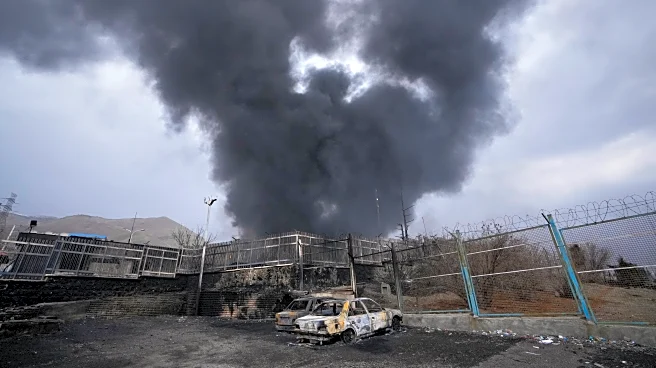
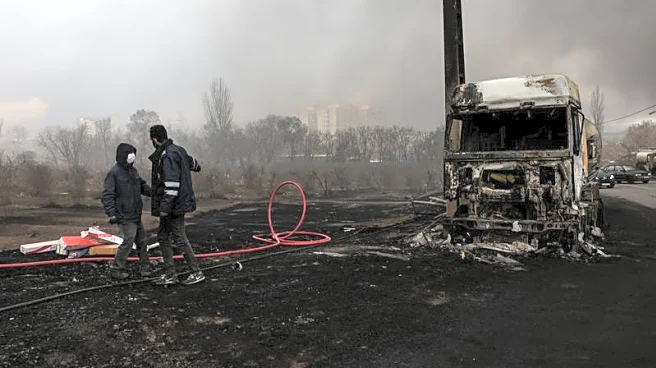
The ongoing conflict involving Iran has led to the closure of the Strait of Hormuz, a critical passage for global oil supplies. This closure has disrupted the flow of approximately 15 million barrels of oil per day, causing a significant spike in fuel
prices. The conflict has also affected energy production across the Middle East, with countries like Qatar and Iraq halting production as a precaution. The rise in fuel prices is impacting U.S. carriers, who are facing increased operating costs. While some carriers with fuel hedging contracts are temporarily shielded, the overall increase in diesel prices is expected to eventually affect shippers and consumers. The situation is exacerbated by the potential for prolonged military involvement, which could further destabilize oil prices.
Why It's Important?
The surge in fuel prices has broad implications for the U.S. economy, particularly the transportation and logistics sectors. Carriers are experiencing increased costs, which could lead to reduced capacity as some may choose to park their rigs rather than operate at a loss. This reduction in capacity is driving up spot market prices, affecting freight demand. The increased costs are likely to be passed on to consumers, contributing to inflationary pressures. Additionally, the conflict's impact on global oil distribution could lead to further price hikes, affecting consumer spending and economic stability. The situation underscores the vulnerability of global supply chains to geopolitical tensions.
What's Next?
The future of fuel prices largely depends on the resolution of the conflict in Iran. The G7 economies are considering coordinated efforts to stabilize global energy supplies, but no agreement has been reached on releasing strategic reserves. The U.S. involvement in the conflict is legally limited to 60-90 days under the War Powers Resolution, but this could change depending on political decisions. If the conflict continues, it could lead to prolonged disruptions in oil production and distribution, further affecting global markets. The potential for a long-term military engagement raises concerns about sustained economic impacts.