



What's Happening?
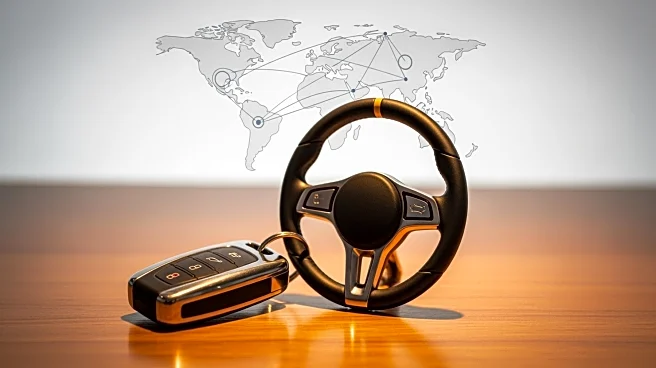
Honda Motor Co. has announced plans to introduce its Acura brand to the Japanese market by reverse-importing U.S.-made vehicles, specifically the Integra and Passport models. The Integra Type S, which will maintain its U.S. specifications including left-hand
drive, is set to be available in Japan in the latter half of 2026. This move marks a significant strategy shift for Honda, as it seeks to leverage its U.S. manufacturing capabilities to meet demand in its home market. The decision to export these models from the U.S. to Japan highlights the growing importance of the American manufacturing base for Honda's global operations.
Why It's Important?
This strategic move by Honda underscores the increasing globalization of the automotive industry, where manufacturing and sales strategies are becoming more interconnected across borders. By exporting U.S.-made vehicles to Japan, Honda is not only optimizing its production resources but also potentially enhancing its brand prestige in Japan by offering models that are popular in the U.S. market. This could lead to increased sales and market share in Japan, benefiting Honda's overall financial performance. Additionally, this decision may influence other automakers to consider similar strategies, potentially impacting the U.S. automotive manufacturing landscape and employment.
What's Next?
As Honda prepares to launch the Integra and Passport in Japan, the company will likely focus on marketing strategies to build brand recognition and consumer interest in these models. The success of this initiative could prompt Honda to expand its reverse-import strategy to include other models or markets. Additionally, the automotive industry will be watching closely to see if this move prompts other manufacturers to adopt similar cross-border production and sales strategies, potentially reshaping global automotive trade dynamics.