



What's Happening?
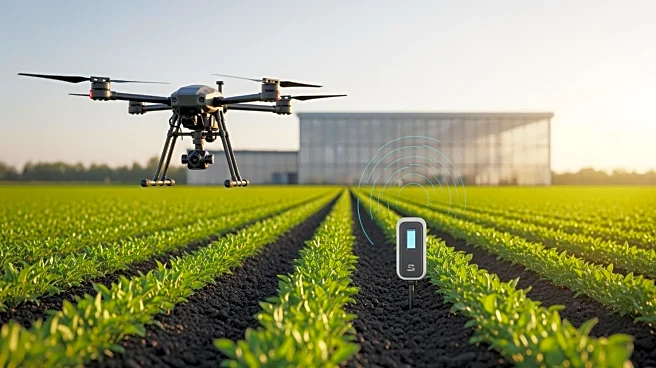
The global smart farming market is projected to grow significantly, reaching $22.45 billion by 2031, according to DataM Intelligence. This growth is driven by the increasing adoption of precision agriculture technologies, which aim to improve crop yields and resource efficiency. The integration of IoT, AI, and data analytics in farming operations is a key factor in this expansion. Additionally, supportive government initiatives, labor shortages in agriculture, and the use of smart sensors, drones, and automated irrigation systems are accelerating market growth. North America currently leads the market with a 39.7% share, attributed to early adoption of these technologies and strong government support.
Why It's Important?
The expansion of the smart farming market
reflects a broader shift towards sustainable and efficient agricultural practices. As global food demand rises due to population growth, the need for innovative solutions to enhance productivity and reduce environmental impact becomes increasingly critical. The adoption of smart farming technologies can help address labor shortages and improve resource management, making agriculture more resilient to climate variability. This market growth also presents significant opportunities for technology companies and startups specializing in agricultural innovations, potentially leading to increased investment and job creation in the sector.
What's Next?
As the smart farming market continues to grow, further advancements in technology and increased collaboration between tech companies and agricultural stakeholders are expected. Governments may introduce additional policies and incentives to support the adoption of smart farming practices, further driving market expansion. The focus on sustainability and efficiency is likely to lead to the development of new technologies and solutions tailored to specific agricultural challenges. Additionally, as more regions adopt smart farming technologies, the global agricultural landscape may undergo significant transformation, with potential implications for food security and environmental sustainability.