








What's Happening?
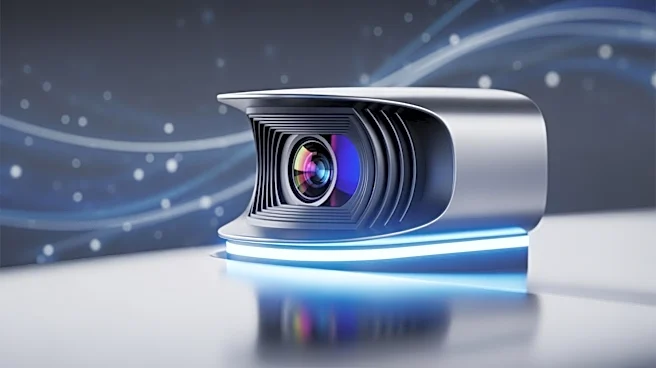
Researchers at Penn State have developed a new sensor, called a photomemristor, designed to improve the vision capabilities of autonomous vehicles. This sensor mimics the human eye's ability to adapt to varying light conditions, potentially enhancing
the reliability of driverless cars in challenging environments. The photomemristor is a small component that adjusts quickly between bright and dark settings, outperforming traditional sensors. This innovation could address current limitations in autonomous vehicle technology, particularly in mixed lighting conditions, such as those encountered during night driving or in adverse weather.
Why It's Important?
The development of the photomemristor represents a significant advancement in autonomous vehicle technology, addressing a critical challenge in the field: the ability to operate safely in diverse lighting conditions. By improving the visual capabilities of driverless cars, this technology could enhance safety and reliability, potentially accelerating the adoption of autonomous vehicles. This advancement could also have broader implications for industries reliant on machine vision, such as robotics and manufacturing, where improved sensor technology can lead to more efficient and adaptable systems.
What's Next?
The next steps for the Penn State research team involve expanding the sensor's capabilities to process both visual and tactile data, aiming to create a more comprehensive machine vision system. As the technology matures, it could be integrated into commercial autonomous vehicles, enhancing their performance in real-world conditions. Additionally, the potential applications of this sensor extend beyond vehicles, with possibilities in robotics and assistive technologies for the visually impaired, suggesting a wide range of future developments and innovations.