







What's Happening?
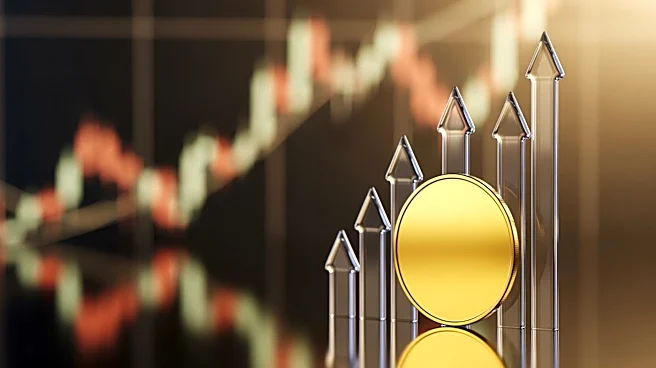
Gold experienced a significant price increase of $140 on Thursday, following a period of volatility and losses earlier in the week. The turnaround was largely attributed to geopolitical developments, specifically President Trump's decision to call off
a planned military strike on Iran. This decision renewed optimism for a diplomatic resolution, which in turn reduced immediate geopolitical risks and triggered a short-covering rally in gold. Prior to this, gold had faced a challenging week, with prices dropping due to stronger-than-expected U.S. jobs data and inflation reports, which reinforced expectations of a continued restrictive monetary policy by the Federal Reserve.
Why It's Important?
Gold is often seen as a safe-haven asset, and its price movements can reflect broader economic and geopolitical sentiments. The recent surge underscores the impact of geopolitical tensions on commodity markets, as well as the complex interplay between economic indicators and investor behavior. The decision to halt military action against Iran alleviated some immediate geopolitical concerns, prompting a rebound in gold prices. However, the underlying economic conditions, such as strong labor market data and persistent inflation, continue to pose challenges for gold as an investment. The market's reaction highlights the sensitivity of gold prices to both geopolitical and economic developments.
What's Next?
The future trajectory of gold prices will likely depend on further developments in U.S.-Iran relations and the broader geopolitical landscape. Any breakdown in diplomatic progress could reignite demand for gold as a safe-haven asset. Additionally, upcoming economic data releases and Federal Reserve policy decisions will be critical in shaping market expectations and influencing gold prices. Traders and investors will need to closely monitor these factors to assess the potential for sustained price movements in gold. The ability of gold to reclaim and maintain levels above key technical thresholds, such as the 200-day moving average, will also be an important indicator of market sentiment.